![The Ultimate Guide to Being a Successful Brand Ambassador [With Examples]](https://www.overthetopseo.com/wp-content/uploads/2026/03/the-ultimate-guide-to-being-a-successful-brand-ambassador-wi-featured.jpeg "The Ultimate Guide to Being a Successful Brand Ambassador [With Examples]")
What do you believe draws in more clients? A sponsored business ad or witnessing a reliable individual utilizing and loving your product?
Starting a brand ambassador program could be the answer for you if you want to use influencer. Word-of-mouth marketing strategies in a more genuine way. For a deeper dive, explore our guide on Event Marketing 101.
Through the sharing of real champions, a brand ambassador program can assist you in raising brand recognition and expanding your consumer base.
Explore more in our digital marketing guide and social media marketing resources.
But how can you create a brand ambassador program that incorporates your distinctive brand? Study what is effective. For ideas, we’ve broken down 10 of the top brand ambassador program examples below. For a deeper dive, explore our guide on Neil Patel Created Expanded.
what is a brand ambassador?
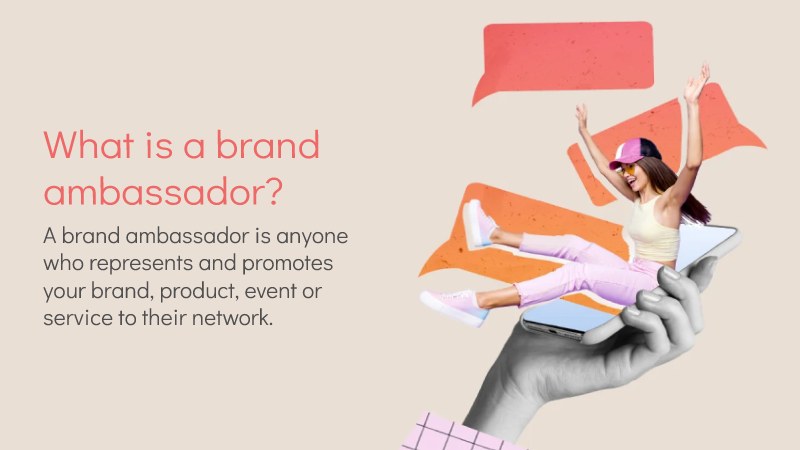
selective supporters of your brand who are familiar with and enthusiastic about it sign a formal contract (known as a brand ambassador contract) promising to spread the word about you to their contacts and social circles.
They are concentrated on developing connections with potential customers both offline and on social media by talking about their own interactions with your brand.
What Does a Brand Ambassador Look Like?
Most of us have probably seen celebrities serving as brand ambassadors. For instance, Beyoncé represents Pepsi as a brand ambassador. Nespresso’s ambassador is George Clooney. Adidas, Samsung, and Breitling have all received David Beckham’s endorsement.
Beyond the world of celebrities, there are many additional brand ambassadors. A brand ambassador is somebody who loves your brand. Promotes it to your audience authentically, as we can see from some of the top brand ambassador program examples below.
What is a Brand Ambassador Program?
A brand ambassador program formalizes the procedure for selecting. Educating brand ambassadors, as well as for keeping them informed about your company, giving them promotional materials, and rewarding them for their efforts.
Affiliate programs and brand ambassador programs can occasionally be identical (if you choose to pay ambassadors commissions on sales). The finest brand ambassadors, however, are more focused on cultivating relationships and being real than generating every transaction, unlike affiliates.
Do Brand Ambassador Programs Have Any Effect?
They do, indeed! Having a brand enthusiast actively advocate for you can work wonders. Here are some particulars that contribute to a brand ambassador program’s success:
- 92% of customers say they are more likely to heed advice from friends and family than brand advertising. When a brand ambassador, who personally uses and adores your products, makes the recommendation, it is even more powerful.
- Brand ambassador contracts are often long-term commitments (compared to social media influencers or other brand advocates). This tells a compelling story that makes your viewers feel more engaged.
- Additionally, brand ambassadors receive a lot in return, including access to a supportive network, insider brand information, and practical expertise in brand management. Both your brand and your brand ambassadors remain committed to your brand ambassador program as a result of this win-win connection.
Best Example of Brand Ambassador Programs
Here are our top picks for ambassador program examples that we’ve seen, without further ado. To get ideas for your own ambassador marketing plan, read our breakdown:
Bumble

Bumble, which was first made available in 1994, is a dating app where women initiate contact. The organization has expanded its online connections to include meetups and networking while still upholding its aim to empower women.
Bumble Brand Ambassador Program
One of the world’s most engaging ambassador programs is Bumble’s, which it refers to as The BeeHive. Bumble actually runs two specialized ambassador programs since they are so aware of the value of targeted ambassadorship and networking.
For college-aged female leaders, the first is called Bumble Honeys. The second, Queen Bees, is geared toward young urban professionals with a knack for networking.
To join its elite program of move-making marketers, Bumble says it chooses “. The most skilled tastemakers and change-seekers throughout the world.” those chosen “should reflect bumble and assist in propagating our brand mission at their university or in their city,” according to the selection criteria.
Both Honeys and Queen Bees are entrusted with recognizing trends, coming up with innovative ideas to reach the brand’. S target market, organizing events, planning guerilla pop-ups, negotiating partnerships, collaborating directly with bumble’s headquarters, and engaging with “opinion leaders and influencers.”
The aim? to increase Bumble’s visibility and communicate the company’s objective in a way that connects with its audience.
Why Does The Program Work?
First of all, we appreciate how specific the company is regarding the ambassadors they wish to have “. In their hive.” the two ambassador programs are positioned as opportunities for leaders to build their resumes and create meaningful, long-lasting relationships that will advance their careers, which goes hand in hand with the brand’s focus on women’s empowerment. For a deeper dive, explore our guide on Brand Building.
The brand ambassadors for Bumble have the opportunity to “. Engage with like-minded hustlers,” expand their networks, develop as leaders, and take advantage of uncommon, enjoyable chances.
Red Bull
![The Ultimate Guide to Being a Successful Brand Ambassador [With Examples]](https://www.overthetopseo.com/wp-content/uploads/2023/02/red-bulls-brand-ambassador-program.png)
Red Bull has been “providing you wirings since 1987” as the business that created the new product category of energy drinks. Thanks to its numerous marketing initiatives, including sports club ownership, celebrity endorsements, a Red Bull Records label,. Its well-known ambassador program, the company produces one of the best-selling energy drinks in the entire globe.
Red Bull’s Brand Ambassador Program
One of the best and longest-running brand ambassador programs in existence today belongs to Red Bull. In order to “generate awareness and enthusiasm for the product. Brand,” more than 4,000 brand ambassadors who are of college age are known as Student marketers. They do this by giving other students, athletes, and anybody else in need of an energy boost wings.
Why Does The Programme Work?
This ambassador program engages more people than simply the college students that make up Red Bull’s primary market. The program can also launch their careers as brand ambassadors because it is positioned as a very selected, professional opportunity.
Through guerrilla marketing techniques and online sharing, marketers are tasked with spreading Red Bull throughout their university (or entire region).
They connect with the public at Red Bull’. S renowned events, work with the brand’s sponsored athletes, and look for clever ways to spread red bull. Additionally, they are encouraged to “engage with various opinion leaders to make their ideas a reality.”
Gymshark

Gymshark is a brand of workout clothes and accessories that was established in Britain. The company’s mission is to lead the way in performance and engineering for people who lead active lifestyles. Gymshark differs from other competitors in the market, nevertheless, because of its emphasis on social media and collaboration with brand ambassadors.
Gymshark’s Brand Ambassador Program
Gymshark, a manufacturer of athletic wear, owes its current level of success to its brand ambassador program.
The company initially collaborated with fitness video influencers. As it expanded, the business started to create a family of enduring ambassadors who shared its enthusiasm for relationships and fitness.
With one of the top brand ambassador programs today, Gymshark has elevated these connections. Some professional athletes have agreements to serve as ambassadors for the long term (as opposed to simply for special campaigns),. Some have even partnered to create their own Gymshark lines.
Why Does The Program Work?
Think again if you believe that Gymshark solely prioritizes authentic clients who genuinely adore the brand over scoring the bigger names.
It’s all about being honest, as Gymshark’s Head of PR Stephanie O’Neill told Fashion Monitor. Most of the Gymshark ambassadors were once brand supporters and customers. Who could represent the company more effectively than those who genuinely adore Gymshark?
All Gymshark ambassadors cultivate genuine relationships with consumers during live events and on social media platforms with strong engagement. “. It’s all about the vision and what they stand for,” claims o’neill. Rather than how many followers [possible ambassadors] have, we are more interested in how they interact with them.
Pura Vida
![The Ultimate Guide to Being a Successful Brand Ambassador [With Examples]](https://www.overthetopseo.com/wp-content/uploads/2023/02/pura-vida-brand-ambassador-program.png)
Pura Vida is a brand that supports local craftsmen by selling hand-made bracelets and jewelry. The business, which was started by two friends while on vacation in Costa Rica, is all about savoring the little things. Living each day to the fullest. The goal of Pura Vida is to help others and strengthen communities.
Pura Vida Brand Ambassador Program
The ambassador program of Pura Vida is a combination of an ambassador program and an affiliate marketing scheme.
Through an online form, customers are invited to apply to the program. Once chosen, the ambassadors are qualified to receive a 10% cash commission on sales they bring about, free products when they reach predetermined milestones,. Entries into giveaways open exclusively to ambassadors.
To encourage more referrals, its ambassadors are given a 20% discount voucher to give to friends and family. Additionally, they have access to a private community of ambassadors and get first dibs on new products.
Why Does The Program Work?
Even though the Pura Vida ambassador program is primarily focused on sales, as you can see from these endorsements, it only selects those who are already genuinely passionate about the company. As a result, ambassadors that enjoy high regard among their peers share information in an authentic way.
PINK
Victoria’s Secret’s PINK lingerie and clothing collection caters to a younger audience (ages 13–22). It had a promising beginning when it originally debuted in 2010, and it has since developed to create its own chain of independent PINK stores. Strong marketing initiatives by the company, particularly its PINK Nation and brand ambassador programs, have also been successful.
Brand Ambassador Program
PINK, a company founded by college students, aptly chooses young ladies to represent their brand on US college campuses.
Ambassadors must exhibit “the enthusiasm, excitement, and fun of college life,” just like the brand. To demonstrate their readiness to establish a community, applicants must have a network of both online. Offline contacts as well as a history of campus activity.
Naturally, brand ambassadors also need to have a history of supporting the PINK brand, which in this case means joining its loyalty program.
After being hired, PINK salespeople are required to do brand training that explains the ins and outs of the company and how to market it. In order to deliberately raise PINK’s brand awareness among the population they are most familiar with, they can then begin working together with school organizations. Their neighborhood PINK store, plan guerilla marketing campaigns, and lead events geared towards other young women on campus.
Why Does The Programme Succeed?
To aid in their advertising, this brand ambassador program example provides special goods, discounts, and unexpected gifts. Additionally, it allows ambassadors to connect with the PINK leadership “. Via meetings and weekly surveys” for the possibility to direct the development of upcoming products.
Finally, How Do You Develop a Brand Ambassador Programme?
What can you learn from the best brand ambassador programs mentioned above? Here are all of the success factors we highlighted for you to consider when launching your own ambassador marketing program:
- Find ambassadors whose values align with yours and whose demographics are most similar to your brand’s target audience.
- The size of an ambassador’s following isn’t as important as the trust they’ve established with their audience. Look for bloggers, micro-influencers, and other potential ambassadors who have a high level of engagement.
- When choosing brand ambassadors, don’t forget about your loyal customers. They’re probably already promoting you to others, so why not ask them to be ambassadors and formalize the relationship?
- Consider inviting potential brand ambassadors to you by posting a simple brand ambassador application on your website.
- Set the ground rules for promoting your brand as an ambassador, including messaging dos and don’ts, so that ambassadors know what to expect when they sign on.
- However, give ambassadors enough creative license to promote you in their own unique voice and style.
- Allow ambassadors to focus on sharing their brand experiences and building relationships rather than making sales. They should be able to converse effectively both online and offline.
- Give ambassadors free products to try so they can share their honest opinions.
- Keep ambassadors informed of how your brand is evolving and provide resources to assist them in promoting you. Consider forming an ambassador network to disseminate this information.
- Involve brand ambassadors in discussions with brand managers. Their suggestions and feedback are frequently invaluable.
- Communication is essential in any long-term relationship. Assure that ambassador knows how to contact you if they have any questions.
- Allow ambassadors to test new products before the general public. Their feedback is frequently invaluable.
- Consider providing ambassadors with discount codes to share with their audience, which increases the likelihood that they will bring in new customers.
- Reward ambassadors for their efforts with special perks and incentives.
- Make sure you have the right brand ambassador software tool to help you manage and track the metrics of your program.
For a deeper dive, explore our guide on Product Launch Checklist.
Frequently Asked Questions
Q: What is this guide about?
This comprehensive guide provides strategies and best practices for achieving success in your marketing efforts. Following these approaches can help improve your results and competitive advantage.
Q: How long does it take to see results?
Results vary depending on consistency and implementation quality. Most strategies require 3-6 months of dedicated effort before significant improvements become visible. Ongoing optimization is essential.
Q: Do I need professional help?
While basic implementation can be done independently, professional guidance often accelerates results and helps avoid common mistakes. Consider experts if you lack internal resources.
Q: What are the most important factors for success?
Key success factors include thorough research, consistent execution, quality over quantity, regular performance monitoring, and adapting to industry changes.
Q: How do I measure success?
Success depends on your goals but typically involves tracking KPIs like traffic, conversions, revenue, and engagement rates. Regular analysis helps identify improvements.
Q: What digital marketing channels should I focus on?
The best channels depend on your audience. Most businesses benefit from SEO, content marketing, social media, and paid advertising. Start where your audience is most active.
The Evolution of Digital Marketing: From Traditional to Modern Approaches
Digital marketing has undergone a remarkable transformation over the past two decades, evolving from simple banner advertisements. Email campaigns to sophisticated, data-driven strategies that leverage artificial intelligence and machine learning. Understanding this evolution provides valuable context for developing effective modern marketing strategies that resonate with today’s consumers.
The early days of digital marketing were characterized by interruptive advertising tactics that prioritized visibility over relevance. Companies spent significant budgets on display ads that reached broad audiences but delivered limited engagement. As consumer behavior shifted and technology advanced, marketers began recognizing the value of permission-based marketing. Targeted approaches that delivered personalized messages to specific audience segments.
Today’s digital marketing landscape demands integrated approaches that combine multiple channels and tactics into cohesive customer experiences. The most successful businesses recognize that modern consumers interact with brands through complex, non-linear journeys that span multiple devices and platforms. Meeting customers where they are requires sophisticated targeting capabilities, real-time personalization, and seamless cross-channel experiences.
The integration of marketing technology has enabled unprecedented levels of automation. Optimization, allowing marketers to deliver the right message to the right person at the right time. These capabilities have transformed marketing from an art to a science, enabling continuous improvement based on real-time performance data and predictive analytics.
Strategic Content Development for Search Engine Success
Content remains the foundation of successful digital marketing, serving as the primary mechanism for attracting organic traffic, building brand authority, and engaging target audiences. Developing a comprehensive content strategy requires understanding search intent, creating valuable resources, and optimizing for both search engines and human readers. For a deeper dive, explore our guide on Color Psychology Marketing.
Effective content addresses specific search queries while providing genuine value to readers. This requires deep understanding of your audience’s needs, questions, and pain points. The best content answers questions comprehensively, provides actionable insights, and offers unique perspectives that readers cannot find elsewhere.
Content optimization extends beyond keyword placement to include structural elements, readability, and multimedia integration. Well-structured content with clear headings, bullet points, and visual elements performs better in search results while delivering superior user experiences. Mobile optimization is particularly critical as mobile traffic continues growing.
Content promotion and distribution are equally important as creation. Even excellent content delivers limited results if target audiences cannot discover it. Strategic distribution leverages social media, email marketing, influencer partnerships, and paid promotion to maximize content reach and impact.
Data Analytics and Performance Measurement Fundamentals
Modern marketing success depends heavily on sophisticated analytics capabilities that enable data-driven decision making. Understanding which metrics matter most and how they connect to business outcomes allows continuous optimization of marketing efforts and improved return on investment.
Essential marketing metrics include traffic volume and sources, engagement rates, conversion rates, customer acquisition costs, and lifetime value. Each metric provides insights into different aspects of marketing performance, and comprehensive analysis reveals the full picture of marketing effectiveness.
Attribution modeling helps marketers understand how different touchpoints contribute to conversions. Multi-touch attribution provides more accurate pictures of customer journeys than last-click attribution, enabling better allocation of marketing budgets across channels and campaigns.
Advanced analytics approaches segment data by multiple dimensions to identify patterns and opportunities that aggregate data might miss. Understanding audience segments, channel performance, and campaign effectiveness enables continuous optimization and improved results over time.
Building Brand Authority Through Thought Leadership
Establishing thought leadership in your industry provides significant competitive advantages, including increased brand awareness, customer trust, and organic visibility. Thought leadership requires consistent creation of valuable content that demonstrates expertise and unique insights.
Effective thought leadership content addresses emerging trends, challenges conventional wisdom, and provides actionable guidance that readers can apply to their own situations. This type of content positions your brand as an authority that audiences can trust for reliable information and guidance.
Building thought leadership requires sustained effort over time, with consistent publication of high-quality content that addresses relevant industry topics. The most successful thought leadership strategies identify unique perspectives and expertise areas that differentiate your brand from competitors.
Distribution amplifies thought leadership impact. Strategic promotion through social media, email marketing, industry publications, and speaking opportunities extends reach and builds recognition among target audiences.
Maximizing Return on Marketing Investment
Proving and maximizing marketing return on investment requires clear objectives, sophisticated tracking, and continuous optimization. The most successful marketing organizations treat marketing as an investment that must deliver measurable returns rather than an expense that cannot be quantified.
ROI calculation requires understanding customer lifetime value, acquisition costs, and the contribution of marketing activities to revenue generation. These calculations enable informed budget allocation decisions and help identify the most effective marketing tactics for your specific business.
Continuous testing and optimization improve marketing performance over time. A/B testing, multivariate testing, and iterative improvement processes enable identification of optimal approaches and continuous enhancement of marketing effectiveness.
Marketing automation improves efficiency while enabling personalization at scale. Automating routine tasks frees marketing teams to focus on strategic initiatives while maintaining consistent customer experiences across touchpoints.
Future-Proofing Your Digital Marketing Strategy
The digital marketing landscape continues evolving rapidly, with emerging technologies, changing consumer behaviors, and new platforms creating both challenges and opportunities. Future-proofing your strategy requires staying current with trends while maintaining focus on fundamental marketing principles.
Artificial intelligence and machine learning continue transforming marketing capabilities, enabling more sophisticated targeting, personalization, and optimization. Businesses that embrace these technologies gain competitive advantages through improved efficiency and effectiveness.
Privacy regulations and changes to third-party cookies require adaptation of tracking and targeting approaches. First-party data strategies and consent-based marketing become increasingly important as the industry transitions to a privacy-focused environment.
Voice search, visual search, and AI-powered search experiences create new optimization requirements. Adapting content and technical strategies for these emerging search modalities positions businesses for success in evolving search environments.

Blockchain Life 2024 – The Blockchain Event of the Year
Blockchain Life 2024 stands as one of the most significant blockchain. Cryptocurrency events in Europe,…
Read More →
Top Franchise Marketing Strategies to Attract New Clients
In recent times, the franchising industry is emerging. There are more than 300 companies that…
Read More →
Creating a Logo: 5 Game-Changing Trends You Need to Know
Logo design trends continue evolving as brands seek distinctive visual identities that resonate with contemporary…
Read More →
Color Psychology in Marketing: Building Brand Identity and Trust
One of the most intriguing—and contentious—aspects of marketing is the psychology of color as it…
Read More →
Social Proof: What It Is and How To Apply To Your Website
Have you ever bought a product based on a recommendation from someone else? If yes,…
Read More →-
 By Guy Sheetrit
- Feb 16, 2023
 By Guy Sheetrit


