Building high domain authority in front of search engines is the ultimate goal for every other website. They practice specific tactics to do so. Solving the queries that a large audience is facing is the best thing to do. That means the more you focus on finding those queries and answering them, the more traffic you will get. The beautiful thing about applying this strategy is that it’s free. Answer The public web app gives you exactly what you are searching for. Let’s find out something more about their fruitful services.
What Is the Answer The Public Web App?
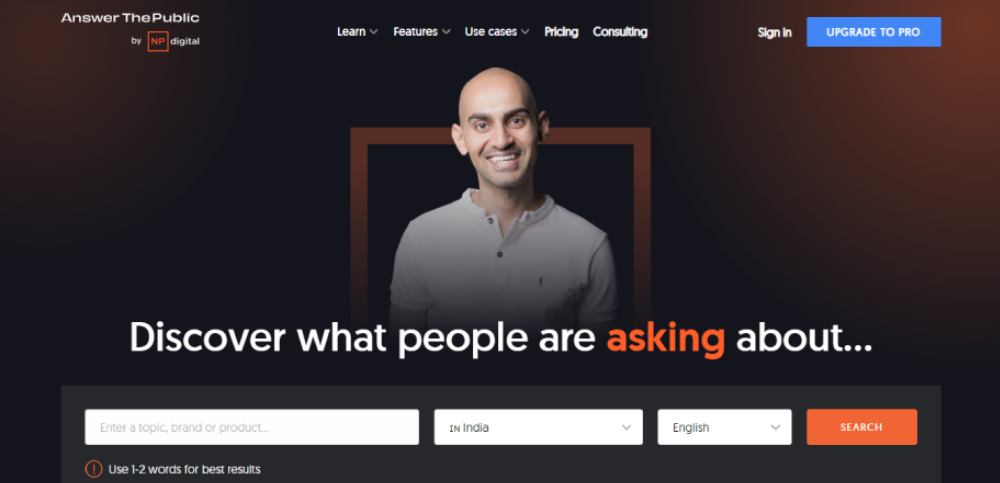
Answer the Public is a popular website that allows you to fish out what your target audience is searching for on the internet. Because this tool integrates the suggested results from search engines, it can lead you to an ocean of content ideas.
You can acquire a list of queries that people ask search engines after using this powerful tool This allows you to get the intentions and reasons hidden behind the queries searched by people. To get the benefit of the Answer The Public web app, go through the complete article.
Effective Ways to Use Answer The Public Web App for Content Marketing
Answer The Public web app will present you with a variety of topics in which people may be interested, but you do not need to know all of them. Simply separate what you need instead of prioritizing many. Choose the topics that are most relevant to your niche. Here is how to make use of Answer The Public pretty straightforwardly.
Choose Relevant Topic
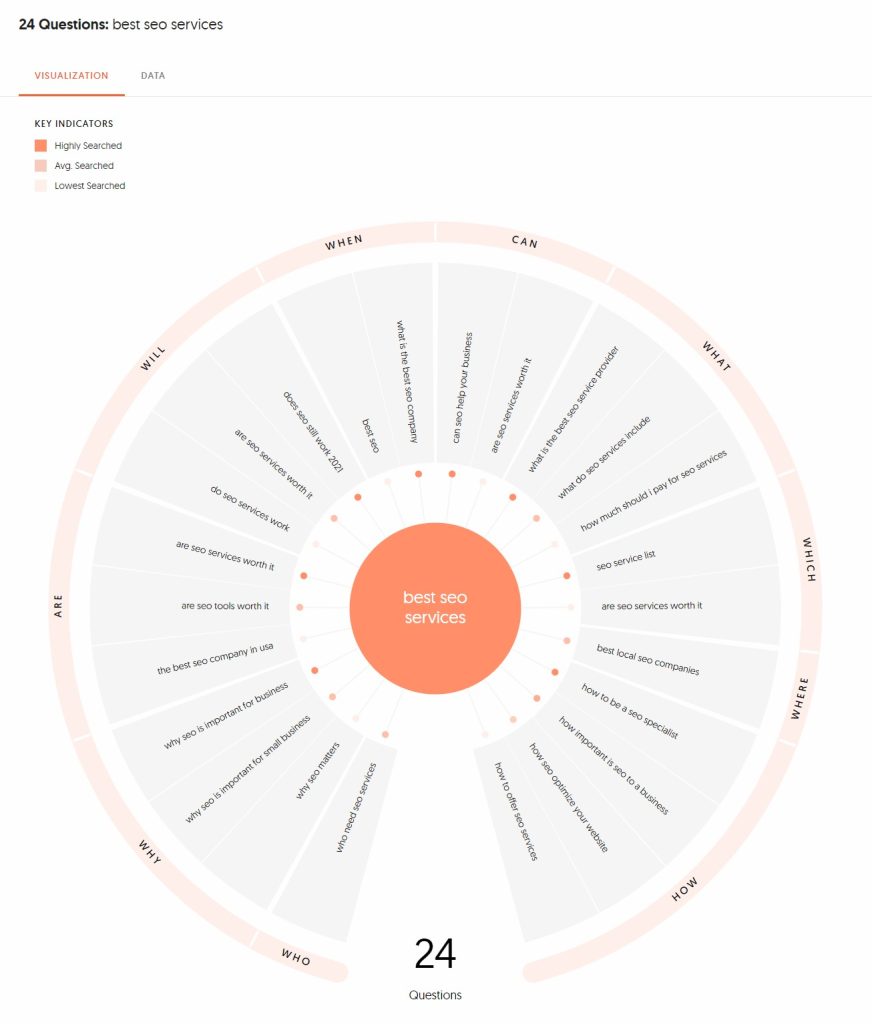
A fine piece of content that has the potential to receive a lot of traffic is all you want in the end. For that, you should choose a subject that is directly related to the target audience. In addition, it must be a question that you have an adequate answer for. For example, if someone searches for “best SEO services” they are probably interested in this and they will pay attention to only those who are providing the information regarding the search. Therefore, choose a topic that means something to your target audience and fulfills their desire. For a deeper dive, explore our guide on Google Analytics.
Put Aside Your Pre Instilled Opinions
When it comes to our target audience, we’re all guilty of relying too much on our philosophy. But when it comes to the game of keywords, being cocky may even be pricey. Unknowingly, you can be projecting your own biases on people you haven’t even met yet.
Therefore, you must use Answer The Public in conjunction with carefully thought-out buyer personas. It will assist in creating a realistic portrait of your ideal audience, including their pain points. Anyhow, if you find difficult OTT, the best digital marketing firm is here to help you reach the heights.
Optimize the Keyword Game
After getting the right topic or question, find out how well it is addressed by others. You can use Google to conduct a search and see what results it has to show. It may appear that many are writing for the same, but not exactly what people are looking for. There is always room for improvement, especially when giving people the ultimate solution. So optimize your main keyword and then put your efforts towards acing the competition.
Focus on Your Niche
Focusing on your niche offers a new range of topics, many of which can be more specialized. Keep in mind that all of these have a sizable number of searches. The Google results page for your keyword could be very competitive.
As you implement this, only a few results will be truly relevant to the search. The rest will be more focused on marketing in general. There is plenty of room for you to develop an article that offers a better solution. Deciding on a niche can lead you to great results for the ultimate solution.
Bring Creativity and Evaluate Progress
While it’s crucial to optimize your content for a certain long-tail keyword, you should also use creativity in your content. Recognize that employing Answer The Public to optimize your content is just one part of your overall content marketing plan. You must track the effectiveness of your content concerning specific goals to gauge the impact of your efforts. You must also continue to evaluate and improve your content in the future. Being creative can work as fuel in content. For a deeper dive, explore our guide on Empower Content Keyword Research.
Use Answer The Public Create SEO Optimised Content
You have a fantastic piece of content on your website that is written after extensive research. It is now ready for public consumption. What if It’s not garnering any attention? That is the purpose of the Internet, answering queries is what Google and other search engines are all about. Therefore, you’ll have an easier time being discovered if you can identify the questions people are asking about the subject of your content and then address those questions in your content. For a deeper dive, explore our guide on AI-generated content good SEO.
The best method to do this is to use the Answer the Public web app. Like Google, it returns a list of queries that people have relating to your solutions. Simply entering a search term, Answer the Public will instantly produce a tonne of questions on the same. You can apply your best SEO practices by keeping all the related terms of that particular search query. It will be more than enough for your target audience to quench their thirst after landing on your content. For a deeper dive, explore our guide on Duplicate Content Ruins Rankings.
Up to the Reader-
Compared to other terms, questions are far more likely to hit the target audience. Answer The Public is an excellent tool for examining the questions that users are posing. Now, it is recommended that you shouldn’t solely depend on the Answer The Public results. The outcomes will be self-evident. With some on-page SEO and content tactics, you can bring more traffic to articles, and the traffic will significantly change. If you really want to ace the SEO competition, feel free to contact OTT which is known for the best SEO services in the market.
Frequently Asked Questions
Q: What is this guide about?
This comprehensive guide provides strategies and best practices for achieving success in your marketing efforts. Following these approaches can help improve your results and competitive advantage.
Q: How long does it take to see results?
Results vary depending on consistency and implementation quality. Most strategies require 3-6 months of dedicated effort before significant improvements become visible. Ongoing optimization is essential.
Q: Do I need professional help?
While basic implementation can be done independently, professional guidance often accelerates results and helps avoid common mistakes. Consider experts if you lack internal resources.
Q: What are the most important factors for success?
Key success factors include thorough research, consistent execution, quality over quantity, regular performance monitoring, and adapting to industry changes.
Q: How do I measure success?
Success depends on your goals but typically involves tracking KPIs like traffic, conversions, revenue, and engagement rates. Regular analysis helps identify improvements.
Q: What digital marketing channels should I focus on?
The best channels depend on your audience. Most businesses benefit from SEO, content marketing, social media, and paid advertising. Start where your audience is most active.
The Evolution of Digital Marketing: From Traditional to Modern Approaches
Digital marketing has undergone a remarkable transformation over the past two decades, evolving from simple banner advertisements and email campaigns to sophisticated, data-driven strategies that leverage artificial intelligence and machine learning. Understanding this evolution provides valuable context for developing effective modern marketing strategies that resonate with today’s consumers.
The early days of digital marketing were characterized by interruptive advertising tactics that prioritized visibility over relevance. Companies spent significant budgets on display ads that reached broad audiences but delivered limited engagement. As consumer behavior shifted and technology advanced, marketers began recognizing the value of permission-based marketing and targeted approaches that delivered personalized messages to specific audience segments.
Today’s digital marketing landscape demands integrated approaches that combine multiple channels and tactics into cohesive customer experiences. The most successful businesses recognize that modern consumers interact with brands through complex, non-linear journeys that span multiple devices and platforms. Meeting customers where they are requires sophisticated targeting capabilities, real-time personalization, and seamless cross-channel experiences.
The integration of marketing technology has enabled unprecedented levels of automation and optimization, allowing marketers to deliver the right message to the right person at the right time. These capabilities have transformed marketing from an art to a science, enabling continuous improvement based on real-time performance data and predictive analytics.
Strategic Content Development for Search Engine Success
Content remains the foundation of successful digital marketing, serving as the primary mechanism for attracting organic traffic, building brand authority, and engaging target audiences. Developing a comprehensive content strategy requires understanding search intent, creating valuable resources, and optimizing for both search engines and human readers.
Effective content addresses specific search queries while providing genuine value to readers. This requires deep understanding of your audience’s needs, questions, and pain points. The best content answers questions comprehensively, provides actionable insights, and offers unique perspectives that readers cannot find elsewhere. For a deeper dive, explore our guide on Tools Preparing Effective SEO.
Content optimization extends beyond keyword placement to include structural elements, readability, and multimedia integration. Well-structured content with clear headings, bullet points, and visual elements performs better in search results while delivering superior user experiences. Mobile optimization is particularly critical as mobile traffic continues growing.
Content promotion and distribution are equally important as creation. Even excellent content delivers limited results if target audiences cannot discover it. Strategic distribution leverages social media, email marketing, influencer partnerships, and paid promotion to maximize content reach and impact.
Data Analytics and Performance Measurement Fundamentals
Modern marketing success depends heavily on sophisticated analytics capabilities that enable data-driven decision making. Understanding which metrics matter most and how they connect to business outcomes allows continuous optimization of marketing efforts and improved return on investment.
Essential marketing metrics include traffic volume and sources, engagement rates, conversion rates, customer acquisition costs, and lifetime value. Each metric provides insights into different aspects of marketing performance, and comprehensive analysis reveals the full picture of marketing effectiveness.
Attribution modeling helps marketers understand how different touchpoints contribute to conversions. Multi-touch attribution provides more accurate pictures of customer journeys than last-click attribution, enabling better allocation of marketing budgets across channels and campaigns.
Advanced analytics approaches segment data by multiple dimensions to identify patterns and opportunities that aggregate data might miss. Understanding audience segments, channel performance, and campaign effectiveness enables continuous optimization and improved results over time.
Building Brand Authority Through Thought Leadership
Establishing thought leadership in your industry provides significant competitive advantages, including increased brand awareness, customer trust, and organic visibility. Thought leadership requires consistent creation of valuable content that demonstrates expertise and unique insights.
Effective thought leadership content addresses emerging trends, challenges conventional wisdom, and provides actionable guidance that readers can apply to their own situations. This type of content positions your brand as an authority that audiences can trust for reliable information and guidance.
Building thought leadership requires sustained effort over time, with consistent publication of high-quality content that addresses relevant industry topics. The most successful thought leadership strategies identify unique perspectives and expertise areas that differentiate your brand from competitors.
Distribution amplifies thought leadership impact. Strategic promotion through social media, email marketing, industry publications, and speaking opportunities extends reach and builds recognition among target audiences.
Maximizing Return on Marketing Investment
Proving and maximizing marketing return on investment requires clear objectives, sophisticated tracking, and continuous optimization. The most successful marketing organizations treat marketing as an investment that must deliver measurable returns rather than an expense that cannot be quantified.
ROI calculation requires understanding customer lifetime value, acquisition costs, and the contribution of marketing activities to revenue generation. These calculations enable informed budget allocation decisions and help identify the most effective marketing tactics for your specific business.
Continuous testing and optimization improve marketing performance over time. A/B testing, multivariate testing, and iterative improvement processes enable identification of optimal approaches and continuous enhancement of marketing effectiveness.
Marketing automation improves efficiency while enabling personalization at scale. Automating routine tasks frees marketing teams to focus on strategic initiatives while maintaining consistent customer experiences across touchpoints.
Future-Proofing Your Digital Marketing Strategy
The digital marketing landscape continues evolving rapidly, with emerging technologies, changing consumer behaviors, and new platforms creating both challenges and opportunities. Future-proofing your strategy requires staying current with trends while maintaining focus on fundamental marketing principles.
Artificial intelligence and machine learning continue transforming marketing capabilities, enabling more sophisticated targeting, personalization, and optimization. Businesses that embrace these technologies gain competitive advantages through improved efficiency and effectiveness.
Privacy regulations and changes to third-party cookies require adaptation of tracking and targeting approaches. First-party data strategies and consent-based marketing become increasingly important as the industry transitions to a privacy-focused environment.
Voice search, visual search, and AI-powered search experiences create new optimization requirements. Adapting content and technical strategies for these emerging search modalities positions businesses for success in evolving search environments.
Conclusion: Embracing Digital Marketing for Sustainable Business Growth
The digital marketing landscape presents unprecedented opportunities for businesses willing to invest in building their online presence. Success requires strategic approach, consistent effort, and willingness to adapt to changing technologies and consumer behaviors. By focusing on delivering genuine value to your audience and continuously optimizing based on data, your business can achieve sustainable growth through digital marketing.
Remember that digital marketing is an ongoing commitment rather than a one-time effort. The businesses that succeed view marketing as a strategic investment that delivers compounding returns over time. Stay focused on your objectives, measure results consistently, and maintain patience required for building lasting success in the dynamic digital environment.
The Evolution of Digital Marketing Strategy
Digital marketing has transformed dramatically over the past decade, evolving from simple banner advertisements to sophisticated, data-driven strategies that leverage artificial intelligence and machine learning. Understanding this evolution provides context for developing effective modern marketing strategies that resonate with today’s consumers.
Modern digital marketing requires integrated approaches combining multiple channels into cohesive customer experiences. The most successful businesses recognize that consumers interact with brands through complex journeys spanning multiple devices and platforms.
Content Marketing Best Practices
Content remains the foundation of successful digital marketing, serving as the primary mechanism for attracting organic traffic, building brand authority, and engaging target audiences. Effective content addresses specific search queries while providing genuine value to readers through comprehensive answers and actionable insights.
Data-Driven Marketing Decisions
Modern marketing success depends on sophisticated analytics enabling data-driven decisions. Understanding which metrics connect to business outcomes allows continuous optimization and improved return on investment through testing and iterative improvement.
Building Brand Authority
Establishing thought leadership provides significant competitive advantages including increased brand awareness and customer trust. Effective thought leadership addresses emerging trends, challenges conventional wisdom, and provides actionable guidance.
Maximizing Marketing ROI
Proving marketing ROI requires clear objectives, sophisticated tracking, and continuous optimization. The most successful marketing organizations treat marketing as an investment delivering measurable returns through continuous testing.
Learn More: Home

Top 10 Best GEO Optimization Agencies in the World (2026)
Top 10 Best GEO Optimization Agencies in the World (2026) Key Takeaways: The global GEO…
Read More →
Site Architecture for SEO: How to Structure Your Website for Maximum Rankings
The complete guide to site architecture SEO structure. Covers crawl budget optimization, internal linking strategy,…
Read More →
Technical SEO Audit: The 80-Point Checklist Used by Top Agencies
After auditing thousands of websites across 16 years, this is the technical SEO audit checklist…
Read More →
Schema Markup Guide: Every Type That Matters for SEO in 2026
Schema markup is no longer optional - it is the difference between showing up in…
Read More →
Core Web Vitals 2026: The Ultimate Technical SEO Checklist
Table of Contents Toggle Table of Contents Understanding the 2026 Core Web Vitals Framework LCP…
Read More →-
 By Guy Sheetrit
- Jan 16, 2023
 By Guy Sheetrit