
Creating high-quality content can be a challenging task. However, with the help of a content writing tool, the process can be made much simpler. Despite the fact that most business and marketing functions are becoming more automated, the process of content creation is still largely manual.
In this article, you’ll find a list of 25 excellent tools and resources that can assist you in conducting research, writing, editing, and creating content. These content writing tools can help you streamline your writing process, improve the quality of your content, and ultimately, attract more visitors to your website.
Free Tools & Resources to Make Content Creation Easier
Free Tools for Content Research
1. Ahrefs’ Keyword Generator

The Ahrefs keyword generator will quickly provide hundreds of related keywords when you enter a topic. Also, the list is arranged by search volume, which measures how frequently a keyword is looked up monthly, allowing you to determine how valuable each entry is to you quickly.
If you’re producing videos rather than textual content, you might also want to have a look at Ahrefs’ YouTube Keyword Tool.
OTT Long-tail Keyword Generator
The Long-Tail Keyword Generator tool by OTT is a valuable resource for those looking to improve their website’s SEO through long-tail keyword research. By incorporating these long-tail keywords into your content, you can improve your chances of ranking higher in search engine results pages (SERPs) and driving more targeted traffic to your website.
2. HubSpot’s Blog Topic Generator
You now have your keywords, but you’re unsure of the perspective or title to spark your imagination. You can use HubSpot’s blog topic generator. The Blog Theme Generator will generate a week’s worth of titles and topic ideas for you after you add a few keywords that describe what your blog is all about. It might not result in the ultimate title of your blog article, but it might help you start considering original new perspectives for subjects you’ve already written about.
3. Answer the Public
The next problem is deciding exactly what to talk about after identifying your keywords and approach. With that, Answers the Public can be of great assistance.
The purpose of this tool is to prompt more questions than it does answers. In reality, it displays all of the queries individuals have on your subject. This is quite helpful for developing the writing’s body and could possibly provide you with some ideas for original material.
4. Google Scholar
Google Scholar is a need if you want to support your essay with expert sources. You may find academic publications, medical journals, scientific reports, theses, dissertations, and more with this search engine.
Also, you can add resources to your library and sign up for publication alerts related to your topic.
5. Google Trends
See the most recent trending searches or track the evolution of interest in your phrase. Google Trends offers historical and current interest information on the subjects you write about.
The “related queries” tool, which shows you trending and “breakout” phrases that are becoming more popular, is the finest part, though. You can do this to stay ahead of the curve (and your competitors.)
Free Content Writing Tools
6. Evernote

Every single day, I use Evernote’s free edition. It has been proven useful at every stage of the writing and editing process, from creating to-do lists and research notes to producing lengthy essays.
one fantastic quality? As long as you have an internet connection, its desktop, online, and mobile applications automatically sync. (And if you work without the internet, it will sync the following time you do.) Also, it constantly saves and syncs your work automatically, providing it with a safe place to write and keep ideas. This is crucial for content creators like us.
Use it to organize your ideas, take notes, save articles or ebooks that inspire you, or schedule your editorial and social media publishing.
7. Blog Post Templates
Although not all blog entries are made equal, there are steps you can do to make yours thorough and shareable. We’ll walk you through an outline for writing effective how-to, listicle, newsjack, and curation blog articles using these post templates. You’ll save time by not beginning from scratch and, hopefully, achieving your blog goals.
8. CoSchedule’s Headline Analyzer
Unbelievably, just 60% of visitors who click on a story actually read it past the headline. That means that your headline is both your first and probably the only opportunity to persuade people to keep reading, so it’s definitely worthwhile to take a little additional time to come up with a strong one.
What makes a headline truly effective? You may learn more by using CoSchedule’s free Headline Analyzer tool. It ranks the quality of your title as well as its worth in terms of SEO, traffic, and social media shares. In my perspective, its strength lies in its ability to support you in enhancing certain elements of your title. For instance, it provides information on word kinds’ frequency and perceived sentiment.
If you’re a video content creator who’s struggling to come up with catchy titles for your videos, look no further than the OTT YouTube Title Generator Tool. This tool is specifically designed to help you generate engaging and click-worthy titles for your videos, based on your chosen keywords or phrases.
9. OneLook Thesaurus
You’ll understand why I’m a OneLook thesaurus nerd if you’ve ever struggled to find a term that was on the tip of your tongue. In its own words, OneLook is a “reverse dictionary.”
OneLook allows you to describe something using a phrase or list of words if you can’t think of the exact word you need. Then it provides hundreds of synonyms, related terms, and even rhymes.
10. Lose the Very
‘Very’ is a lazy word, so avoid using it. A man is fatigued, not just a little bit tired. Use melancholy instead of very depressing.
Losing the Very will assist you in following Robin Williams’ advice from the film Dead Poets Society. This tool is not only highly helpful but also crucial.
Free Tools for Content Editing
11. Grammarly

Although most grammatical problems will be caught by human editors, editing programs like Grammarly are excellent for double- and even triple-checking before you hit “publish” or “send.”
The Grammarly free version verifies grammar, clarity, and delivery. The sophisticated editing suggestions, readability and grammar checks, and plagiarism detection are all included in the premium edition.
12. Hemingway App
This useful editing tool bears the name of Ernest Hemingway, who is renowned for his concise writing. Do you want to write content that is easy to read? This free web software will analyze your writing and suggest ways to make it clearer when you paste some information into it.
The ability to recognize the passive voice and difficult-to-read sentences is one of my favorite features. See how the tool graded the readability of my writing on the right-hand side of the screenshot below. (There is an opportunity for improvement.) Their recommendation to enhance readability generally? Attempt to read at a level that is beneath the 10th grade.
13. Editorial Calendar Template
It might be challenging to develop a balanced editorial calendar, particularly if your team lacks access to a single central calendar. To help you and your team get the upcoming month or year off to a great start, we’ve provided editorial calendar templates for Google Calendar, Google Sheets, and Excel that you can fill out and share with your team.
14. HubSpot Marketing Hub
The primary responsibility of an editor is to produce excellent content, but as you are probably aware, most editors also hold a variety of other positions. The marketing tools from HubSpot are made to support you in completing all of your activities, from organizing content to handling SEO.
This tool’s popular features Including an embedded or popup form might be a terrific approach to collecting contact information from previously anonymous visitors when you’re seeking to increase your readership. This increases the size of your mailing lists, which increases the number of people who read your blog properties.
15. WebFX Readability Test
Your information should be simple to read and consume unless you’re writing furniture assembly instructions.
The WebFX readability test evaluates your material using five different academic grading schemes, averaging out each grade to provide a single result. Also, data on your sentences’ length and word density will be provided.
There are numerous tests like this one, but I enjoy how WebFX lets you paste text or just enter a Website.
Free Design Tools
16. Nimbus Screenshot & Screen Video Recorder
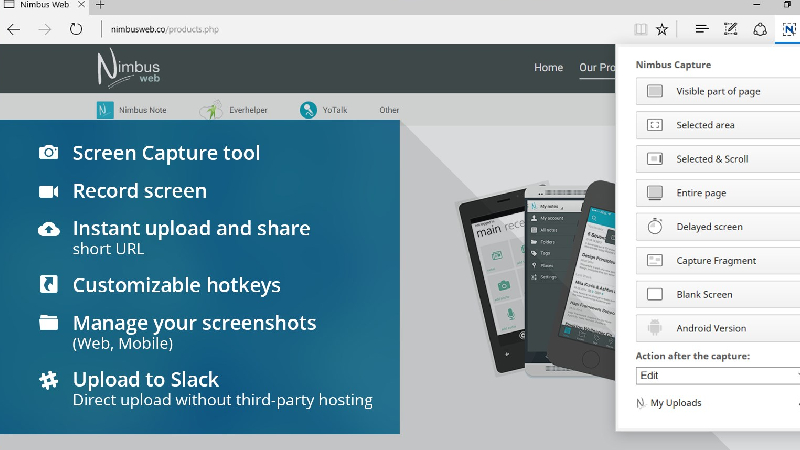
I also regularly use this tool. Indeed, you can take a screenshot of the full screen or just a portion of it using the traditional keyboard shortcut technique. But what if you want your screenshot to contain information that isn’t currently displayed on your screen? For further information, please visit the website.
The web page viewable portion, a selected section, a selected scroll, the complete page, or the entire browser window, including everything below the fold, can all be captured with Nimbus Screenshot.
17. Canva
You’ll enjoy using Canva if you enjoy producing stunning visual content in a hurry. When you’re looking at a long list of to-dos, it can be really difficult to find the time and resources to learn design, pay for design assets, and/or find inspiration to create beauty from scratch; however, Canva has a vast library of pre-made templates and assets that you can modify while also adding your own imagery.
18. Skitch
Evernote offers a free program called Skitch that enhances visual communication. It enables you to annotate pictures, digital assets, Documents, and other items in one location using arrows, callout boxes, text, and more.
The snapshot of the website opens in Skitch for editing and exporting in the example below after I launched the program on my desktop and used the “Screen Snap” button to capture it.
19. Infogram
Infogram is a visual content platform that, while similar to Canva, focuses on assisting you in producing infographics, charts, and data visualization. You’re in luck if you want to use Microsoft Excel to generate charts because Infogram Charts also supports Excel. Also, their infographics are mobile-friendly.
20. Google Fonts
Want to add hip and unique new fonts to your website pages, presentations, publications, and other content? Unknown fact: You can download and use 600 free fonts from Google’s directory.
Simply browse their font collection, pick the fonts you like, and click “Use” to get the HTML code you can copy and paste onto your website. By selecting “Add to Collection,” you can also download the fonts to your computer and use them to create new marketing content.
Free Productivity Tools
21. Coffitivity
A University of Chicago study found that “creative cognition is favorable to a modest amount of ambient noise.” In other words, even a little bit of distraction actually encourages creativity. For many people, including myself, white noise encourages concentration because of this.
There are many white noise makers available, but Coffitivity is my favorite. This particular one provides a continuous range of café background sounds, from “Morning Murmur” and “University Undertones” to “Lunchtime Lounge” and “Brazil Bistro,” at varied intensities. It is a good idea to have a backup plan in case something goes wrong.
22. TomatoTimers
The Pomodoro technique may be about to transform your life if you’ve never heard of it. Pomodoro is a productivity technique that involves working in blocks of 25 minutes, with breaks occurring at regular intervals. This loop makes bigger work feel more manageable and helps you avoid getting sidetracked.
23. Trello
A kanban-style project management application called Trello is much more capable than you may anticipate for free software. They are ideally suited for planning content calendars, writing sprints, group projects, and more because of their distinctive card and list form.
Also, it interfaces with a huge number of other tools, including HubSpot, Google Drive, Mailchimp, and Slack.
24. OneTab
If you’re anything like me, you constantly have 100 tabs open—both literally and figuratively. OneTab is made to assist with straightforward ones.
Your open tabs are instantaneously converted into a list of URLs by this browser extension, which you can save, export, or share. Even if your browser crashes or you restart your computer, the list is still kept. When you’re ready to use that tab once more, you can click it to return immediately to your previous location.
25. Giphy Search
Do you have a coworker who always manages to discover the ideal animated GIFs to share on social media or in the company chat program? You can find excellent GIFs just as quickly with the free Giphy Chrome addon.
All you need to do to utilize the tool is launch the Chrome extension, search, select a GIF, and drag and drop. The tool currently functions on Gmail, Twitter, Facebook, and other platforms, and support is constantly being added.
Conclusion
Although the aforementioned tools and resources can aid in your creation, the final decision regarding the caliber of your material rests with you. You still need to get to know your customers really well, understand the problems your product or service addresses for them, and produce content that supports your customers in solving those problems.
Today’s marketing success depends more on the creativity and soul of the content creator than it does on the code of any tool or technology.
-
 By SEO
- Mar 17, 2023
 By SEO