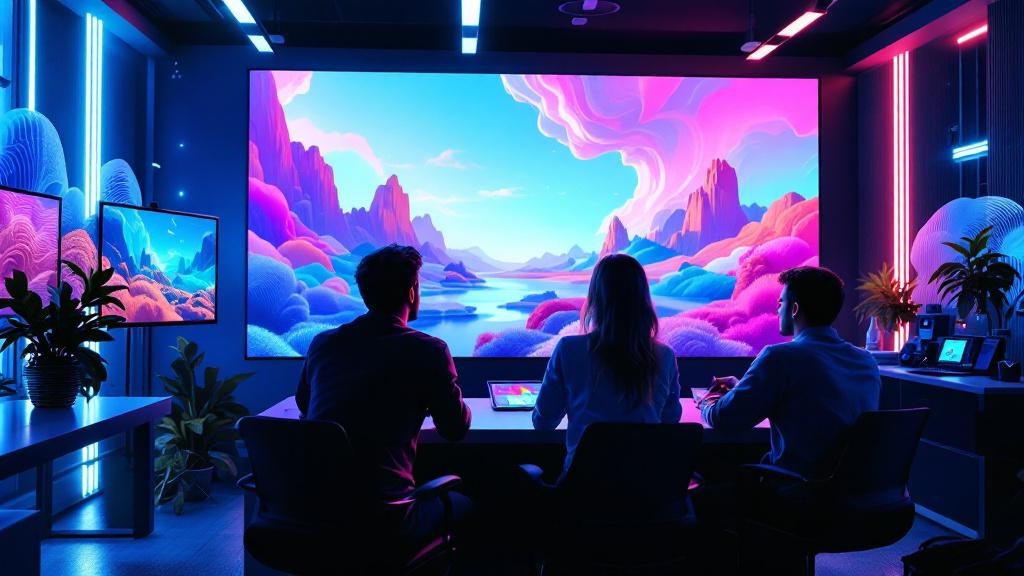
Sora AI Video: OpenAI’s Generator Deep Dive for Marketing Teams
Sora AI video has arrived as one of the most significant developments in content marketing since the smartphone camera democratized video production. OpenAI’s text-to-video generator doesn’t just create clips — it renders photorealistic scenes, complex camera movements, and coherent narrative sequences from simple text prompts. For OpenAI Sora marketers, this opens a fundamentally new production pipeline: campaign videos, product demos, social content, and explainer animations without a traditional film crew or studio. This deep dive covers everything marketing teams need to know to evaluate, adopt, and scale Sora for commercial content production.
What Is Sora AI and How Does It Work?
Sora is OpenAI’s video generation model, trained on a massive dataset of video and image data using a diffusion transformer architecture. Unlike earlier text-to-video systems that produced short, low-resolution clips, Sora can generate:
- Videos up to 20 seconds long at resolutions up to 1080p
- Multiple aspect ratios: widescreen (16:9), vertical (9:16), and square (1:1)
- Photorealistic scenes with complex lighting, motion, and textures
- Multiple characters and their interactions within a single scene
- Dynamic camera movements: dolly shots, pans, zooms, and tracking shots
Technically, Sora treats video data as spatiotemporal patches — small chunks of visual information across both space and time. This allows the model to reason about physical motion, occlusion, and scene continuity far more accurately than earlier approaches.
Sora’s Current Capabilities: What Marketing Teams Can Actually Do
Text-to-Video Generation
The core use case: write a prompt, receive a video. The quality of your prompt dramatically determines output quality. Effective prompts for marketing content typically specify:
- Subject and action (what’s happening and to whom)
- Setting and environment (where the scene takes place)
- Camera style (close-up, wide shot, aerial, tracking)
- Lighting mood (golden hour, studio lighting, dramatic contrast)
- Aesthetic reference (cinematic, documentary, social media native)
Image-to-Video Animation
Sora can animate a static image, bringing product photos, brand imagery, or design assets to life. For e-commerce brands, this means turning product photography into motion content without reshooting — a significant cost reduction for social media advertising.
Video Extension
Sora can extend existing video clips, interpolating backwards or forwards in time to create longer narratives from short source clips. This is particularly useful for extending user-generated content or b-roll footage.
Video-to-Video Editing
Through Sora’s editing interface, marketers can modify specific elements of existing video using text instructions. Change the setting, swap props, alter lighting, or add visual effects without reshooting the original content.
Access and Pricing: What Marketers Need to Know
As of 2026, Sora is available through several OpenAI subscription tiers:
| Tier | Sora Access | Monthly Cost | Generation Limits |
|---|---|---|---|
| ChatGPT Plus | Sora Standard | $20/month | 50 priority / 1,000 relaxed videos |
| ChatGPT Pro | Sora Full | $200/month | Unlimited relaxed, 500 priority at 1080p |
| OpenAI API | API Access | Pay-per-use | Variable by model version |
For marketing teams generating high volumes of content, the API route offers the most flexibility for automation. Priority generations (faster queue) are important for deadline-driven campaign work.
Use Cases: Where Sora Fits in the Marketing Stack
Social Media Content at Scale
The most immediate commercial application is social media content production. Brands that post multiple videos daily — on TikTok, Instagram Reels, YouTube Shorts — face immense production pressure. Sora can generate:
- Seasonal campaign videos adapted to multiple formats simultaneously
- Product showcase clips from text descriptions
- Brand mood videos for awareness campaigns
- Localized versions of existing content for different markets
Paid Advertising Creative Testing
One of the highest-ROI applications is rapid creative testing for paid video ads. Instead of producing 3–5 video variants at high cost, marketing teams can generate 20–30 prompt variations in hours, identify which visual concepts perform best in testing, then invest traditional production budget only in the top performers.
Internal Communications and Training
Many enterprises are using Sora for internal video needs: onboarding explainers, process demonstrations, policy walkthroughs, and event recaps. These don’t require the polish of external marketing content, making AI video especially cost-effective here.
Website and Landing Page Video
Background videos, hero animations, and product explainer clips for websites are natural Sora use cases. Generating video that’s optimized for different devices and load contexts is straightforward through the API.
Storyboarding and Pre-visualization
Even for traditional productions, Sora serves as an exceptional pre-visualization tool. Directors and creative directors can generate rough video approximations of planned shots, share with clients for approval, and refine the creative direction before committing to production budgets.
Prompt Engineering for Marketing Video: A Practical Guide
The SCENE Framework
Use this structure for consistent, high-quality Sora prompts:
- Subject: Who or what is the focus? Be specific about appearance, clothing, expression.
- Context: Where is this happening? Time of day, weather, location details.
- Emotion: What feeling should this scene convey? Words like “aspirational,” “urgent,” “warm,” and “professional” influence tone.
- Narrative: What’s happening in motion? Describe the action sequence, not just a static scene.
- Esthetic: What visual style should this match? Reference film genres, photography styles, or specific aesthetic descriptors.
Example Prompts for Common Marketing Scenarios
Product launch video: “Cinematic close-up of a sleek smartphone emerging from a white mist, revealing its screen displaying a vibrant app interface. The camera slowly pulls back to reveal the full device from multiple angles in a pristine studio setting with dramatic key lighting. The mood is aspirational and premium, 4K, film grain.”
Brand awareness spot: “Aerial footage over a modern city at golden hour, gradually descending to street level where diverse professionals walk purposefully toward a glass office building. The camera tracks one confident woman through the lobby entrance, conveying growth and opportunity. Documentary style, warm color grade.”
E-commerce product demo: “Close-up of a woman’s hands unboxing a luxury skincare set on a marble surface. Each item is revealed slowly with satisfying packaging sounds implied through visual texture. The lighting is soft and flattering, the aesthetic is Pinterest-perfect and aspirational. Slow motion, vertical format for social media.”
Limitations Marketers Must Understand
Text Rendering
Sora consistently struggles with rendering legible text within video frames. Logos, signage, on-screen copy, and call-to-action text must be composited in post-production rather than generated directly. For marketing content that requires readable brand elements, plan for a compositing step.
Precise Human Anatomy
Complex human interactions — especially hands, fingers, and facial expressions in extreme close-up — can show artifacts. For content featuring people prominently, generate multiple variations and select the best outputs.
Consistency Across Clips
Maintaining character consistency across multiple generated clips is still challenging. For brand spokesperson content, AI avatar solutions with fixed character models may be preferable for multi-clip campaigns.
Brand Safety Controls
Sora’s content policies prohibit generation of real people, explicit content, and certain political content. For campaigns featuring real celebrities, athletes, or public figures, traditional content licensing is still required.
Output Ownership and Usage Rights
Users own the output of their Sora generations under OpenAI’s current terms, but commercial usage rights and licensing implications are evolving. Consult your legal team before using AI-generated content in regulated industries (pharmaceutical, financial, legal advertising).
Integrating Sora Into Your Marketing Workflow
Step 1: Define Your Use Cases
Map where AI video genuinely reduces cost or increases output without degrading brand quality. Social testing, internal comms, and background content are high-fit. Hero brand films and spokesperson content may still require traditional production.
Step 2: Build Your Prompt Library
Document prompts that consistently produce on-brand results. Create a shared prompt library your team can iterate from rather than starting from scratch each time.
Step 3: Establish Quality Gates
Define minimum acceptable quality criteria for different use cases. Social testing content has lower thresholds than homepage hero videos. Document these and make review responsibility clear.
Step 4: Integrate Into Production Pipeline
Connect Sora to your existing asset management systems via API. Generated videos should flow automatically into your DAM (Digital Asset Management) system with proper metadata tagging for retrieval and usage tracking.
Step 5: Measure and Iterate
Track performance metrics for AI-generated content versus traditionally produced content. Be willing to iterate your prompt strategies based on which visual styles, narratives, and aesthetics actually drive engagement and conversion.
The Competitive Landscape: Sora vs. Alternatives
| Tool | Strengths | Weaknesses | Best For |
|---|---|---|---|
| Sora (OpenAI) | Photorealism, scene complexity, 1080p output | Text rendering, price | High-quality B-roll, product content |
| Runway Gen-4 | Video editing features, motion control | Lower maximum resolution | Creative editing and effects |
| Pika Labs | Fast generation, affordable pricing | Less photorealistic | Social media, quick iteration |
| Google Veo 3 | High quality, Google ecosystem integration | Access limitations | YouTube and Google Ads content |
| Kling AI | Extended duration, Chinese market | Platform availability | Long-form AI content |
Ethical Considerations for Marketing Teams
As Sora and similar tools become mainstream, marketing teams must address ethical practices proactively:
- Disclosure: Consider transparently labeling AI-generated content, especially as consumer awareness increases.
- Deepfake prevention: Implement strict internal policies against generating content that resembles real people without consent.
- Authenticity balance: AI video is a production tool, not a replacement for genuine brand storytelling. Audiences still respond to authentic human connection.
- Bias awareness: AI models can reflect biases in their training data. Review generated content for representation issues before publishing.
Conclusion
Sora AI video represents a genuine inflection point for marketing content production. For marketing teams willing to invest in prompt engineering, workflow integration, and quality governance, it offers unprecedented ability to produce high-quality video content at scale. The technology is not yet a replacement for all traditional production — complex spokesperson content, events, and premium brand films still benefit from human creativity and production craft. But for social content, creative testing, internal communications, and visual storytelling at volume, Sora is ready for commercial deployment today. Over The Top SEO recommends marketing teams begin pilot programs now, building internal expertise before competitors establish a head start.
Frequently Asked Questions: Sora AI Video for Marketers
What is Sora AI and who made it?
Sora is a text-to-video AI model created by OpenAI. It generates realistic video clips up to 20 seconds long from text prompts, and can also animate images and extend existing video clips. It uses a diffusion transformer architecture and was publicly released in late 2024, available through ChatGPT Plus, Pro, and OpenAI’s API.
How much does Sora cost for marketing teams?
Sora is available with ChatGPT Plus ($20/month) for standard access with 50 priority and 1,000 relaxed generations, or ChatGPT Pro ($200/month) for full 1080p access and 500 priority generations. API access is pay-per-use. For marketing teams generating significant video volume, the Pro tier or API integration typically provides the best economics.
Can Sora generate video with readable text for ads?
No — Sora consistently struggles with rendering legible text within video frames. For ads requiring on-screen copy, logos, or call-to-action text, plan to composite text elements in post-production using video editing software like Adobe Premiere, Final Cut Pro, or After Effects. Generate the visual scene with Sora, then add text in editing.
Is AI-generated video content effective in paid advertising?
Early data from performance marketers indicates AI-generated video performs comparably to traditionally produced content in direct response contexts when used correctly. The key advantage is volume: teams can test 10–20 creative variations at a fraction of traditional production cost, dramatically improving the statistical power of creative testing. The strongest performing concepts can then receive full production investment.
Do I need to disclose when video content is AI-generated?
Legal requirements vary by jurisdiction and industry. As of 2026, the FTC in the US requires disclosure of material connections and deceptive practices but has not issued specific AI content disclosure rules for video. However, platforms including YouTube, Meta, and TikTok are implementing AI content disclosure requirements. Industry best practice and consumer trust considerations strongly favor proactive disclosure, especially for realistic video content.
How does Sora compare to Runway Gen-4 for marketing?
Sora excels at photorealistic scene generation with higher maximum resolution (1080p) and more complex scene handling. Runway Gen-4 excels at video editing features, motion brush control, and creative visual effects. Many professional marketing workflows use both: Sora for generating base footage and Runway for editing and effects. They complement rather than replace each other.
Who owns the copyright to Sora-generated videos?
Under OpenAI’s current terms of service, users own the output of their generations and can use them commercially. However, AI-generated content copyright is an evolving legal area. The US Copyright Office has indicated that purely AI-generated content without significant human creative input may not qualify for copyright protection. Consult with intellectual property counsel before making ownership claims or registering AI-generated works.
-
 By Guy Sheetrit
- Aug 22, 2026
 By Guy Sheetrit
