Until your product or services are particularly niche, your business requires to focus on new markets: visitors from various countries.
Assume you are the owner of an online grocery store. You want to grow your market share in essential nations like the US, Russia, India, China, Canada, Brazil, Australia, etc.
You will need a website to show your items to customers who come from different cultural backgrounds, speak other languages,. Are interested in your products.
For more technical SEO insights, explore our Core Web Vitals checklist and SEO fundamentals guide.
You will have to overcome the following two significant obstacles:
- obtaining traffic from many nations
- delivering material to these locations’ native speakers
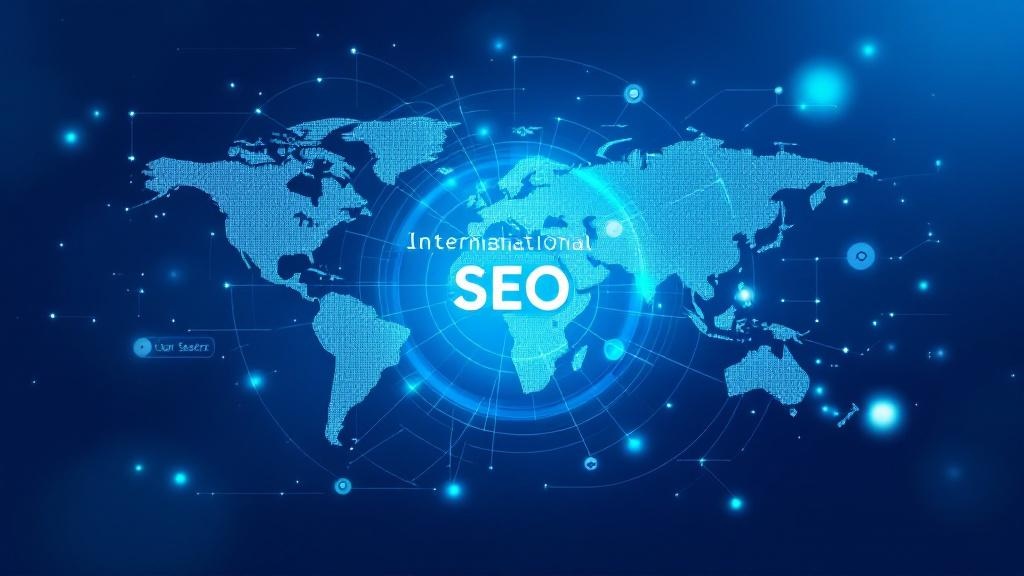
You can overcome these two obstacles with the aid of international SEO. It enables you to reach international clients in their own languages and supports the expansion of your business on a worldwide scale. All website visitors should have a great experience while using global SEO tactics. For a deeper dive, explore our guide on SEO v/s PPC One.
Through this article, we will let you know the importance of international SEO efforts. The particular steps you require to take to optimize your site for a worldwide audience.
First, let’s understand,
Best Practices and Industry Standards for 2026

Staying current with industry best practices ensures your strategies remain competitive and effective. These standards reflect accumulated industry knowledge and proven methodologies.
Quality Standards
Maintain high standards across all activities:
- Prioritize quality over quantity in all deliverables
- Focus on providing genuine value to audiences
- Maintain transparency in all communications
- Follow ethical guidelines and industry regulations
Technology Integration
Leverage modern tools and platforms effectively:
- Utilize automation for repetitive tasks
- Implement analytics for data-driven decisions
- Adopt AI tools appropriately for enhanced productivity
- Maintain security and privacy standards
According to McKinsey research, organizations with integrated technology stacks see 30% higher efficiency gains.
Scaling Your Efforts for Sustainable Growth
Growth requires systematic approaches to scaling while maintaining quality and efficiency.
Scaling Frameworks
Process Documentation: Document all processes to enable consistent execution and team scaling. Create standard operating procedures for repeatable tasks.
Automation Opportunities: Identify tasks suitable for automation. Focus human effort on high-value creative and strategic work.
Team Development: Invest in team capabilities through training and development. Build internal expertise for core competencies.
Systems Thinking: Consider how different elements interact. Optimize the entire system rather than individual components.
Measurement and Optimization
Scale only what works:
- Establish clear metrics for success
- Test at small scale before major investments
- Use data to guide scaling decisions
- Maintain flexibility to adjust approaches
What Do You Mean By International SEO? What Does Global SEO Stand For?

International SEO is often referred to as multilingual SEO and global SEO.
Some of the techniques used for international search engine optimization to raise a website’s visibility include:
- Competitor analysis
- User experience optimization
- Global link building
- Hreflang tag implementation
- Technical SEO Implementation
- International keyword research
- Multilingual content marketing
- Multilingual content optimization
- Site speed optimization
- Site architecture optimization
Advantages of International SEO
Here are a few justifications for why international SEO is crucial to the expansion of your company.
1. Global Audience Reach
By increasing your company’s reach to numerous nations at once, international SEO enables your company to attract customers from all over the world.
If your company is prepared to establish itself as a global brand, international SEO should be a part of your marketing plan.
2. Obtain Massive Organic Traffic
Most websites restrict their audience to those in their home country, which maximizes traffic from that one country. You can target as many nations as you can to attract a tonne of organic traffic to your brand, depending on the size of your organization.
Although it can be difficult to attract traffic from abroad, the U.S. market is quite competitive. Therefore, one of the greatest methods to increase the volume of organic traffic to your website might receive is to implement a thoroughly thought-out worldwide SEO strategy.
3. Upgrade Conversions
Higher conversions result from increased traffic. You can enhance the number of conversions on your site after your website starts to rank internationally for your target keywords with significant purchase intent.
Every company wants to increase its bottom line. You shouldn’t fall behind if there are prospects in foreign markets to increase leads and income for your company.
By choosing international SEO, your company may increase conversions from low-hanging fruit phrases in foreign nations where there is less competition. A higher likelihood of conversions.
4. Turn into an International Brand
Developing a trusted reputation as a global brand is difficult. Your brand, however, can develop to govern the global market with the help of effective international SEO methods (move over, Amazon!).
A worldwide brand must be culturally sensitive because it sells in multiple nations. International SEO aims to increase the usability of your website, uses content marketing that targets native speakers,. Employs CRO (Conversion Rate Optimization) techniques to attract, retain, and convert the proper customers.
Additionally, SEO helps you manage your company’s reputation abroad when used in conjunction with reputation management.
How to Make Your Site More Accessible to International Visitors?
If adequate procedures are not taken to optimize the site for every target location, international SEO can be perplexing. But relax, we’ve made things simple for you! Simply adhere to this step-by-step process to maintain the stability of your global SEO strategy.
You will obtain the best outcomes in the quickest amount of time if your SEO approach is carried out correctly. It will be difficult for you to defeat your rivals if your approach is poorly planned.
Remember that investing in international SEO campaigns is more expensive than investing in local or country-specific campaigns. Therefore, if you get off to the wrong start, you’ll waste time and money on activities that are of little to no value.
The actions you must take in order to run an effective international SEO strategy are listed below:
Step -1 Mention your Target Nations
Step -2 Find the Search Engines to Target
Step -3 Enrol the Native Language and Country -Specific Domains of the Target Search Engines.
Step -4 Register your Top Three Competitors
Step -5 Make Competitor Analysis
Step -6 Do International Keyword Research
Step -7 Finalise your Site/URL Structure
Step -8 Conduct On-Page Optimization
Step -9 Create a Multilingual Content Marketing Plan.
Step -10 Finalise your native SEO Strategy
Step -11 Strategize your worldwide Link Acquisition Strategy
Step -12 Work Towards Customer and User Experience Optimization
Step -13 Monitor Your Global Rankings
Step -14 Continue Website Optimization
Avoid These Mistakes While Creating Your International SEO Strategy
There are several things you should avoid in your global or multilingual SEO plan because SEO best practices are essential for success. By being aware of these things, you may prevent mistakes from being made that could harm your site’. S ability to rank higher or provide a better user experience.
The following should be avoided in your global SEO campaign:
1. Don’t Redirect Users Automatically
Users shouldn’t ever be automatically redirected based on the country from. They are browsing because you can never be sure what language they prefer. The greatest choice is to let users choose the website’s preferred language.
2. Avoid using Machine translation
Because automatic translations are not always precise, it is not advised to translate the material to display it in a user’s preferred language.
The user experience is hampered by inaccurate translations, which may also result in duplicate content problems. It is always preferable to hire a native speaker to write content in the local tongue of the target nation.
The bottom line
Global companies who want to market to individuals in several nations and languages must invest in international SEO. Promoting your website worldwide will increase traffic, and more visitors translate into more sales.
Therefore, using international SEO as a technique to increase traffic and conversions from many nations. To reach your target clients in their preferred languages, use our international SEO guide.
For a deeper dive, explore our guide on Semantic Search SEO.
Frequently Asked Questions
Q: What is this guide about?
This comprehensive guide provides strategies and best practices for achieving success. Following these approaches can help improve your results and competitive advantage.
Q: How long does it take to see results?
Results vary. Most strategies require 3-6 months before significant improvements. Ongoing optimization and consistency are essential for sustainable success.
Q: Do I need professional help?
While basic implementation can be done independently, professional guidance often accelerates results and helps avoid costly mistakes.
Q: What are the most important factors for success?
Key factors include thorough research, consistent execution, quality over quantity, regular performance monitoring, and adapting to industry changes.
Q: How do I measure success?
Track KPIs like traffic, conversions, revenue, and engagement rates. Regular analysis helps identify areas for improvement.
Q: What channels should I focus on?
Most businesses benefit from SEO, content marketing, social media, and paid advertising. Start where your target audience is most active.
For a deeper dive, explore our guide on SEO Ranking Factors Important.
The Evolution of Digital Marketing Strategy
Digital marketing has transformed dramatically over the past decade, evolving from simple banner advertisements to sophisticated, data-driven strategies that leverage artificial intelligence and machine learning. Understanding this evolution provides context for developing effective modern marketing strategies that resonate with today’s consumers.
Modern digital marketing requires integrated approaches combining multiple channels into cohesive customer experiences. The most successful businesses recognize that consumers interact with brands through complex journeys spanning multiple devices and platforms.
Content Marketing Best Practices
Content remains the foundation of successful digital marketing, serving as the primary mechanism for attracting organic traffic, building brand authority, and engaging target audiences. Effective content addresses specific search queries while providing genuine value to readers through comprehensive answers and actionable insights. For a deeper dive, explore our guide on Voice Search SEO.
Data-Driven Marketing Decisions
Modern marketing success depends on sophisticated analytics enabling data-driven decisions. Understanding which metrics connect to business outcomes allows continuous optimization and improved return on investment through testing and iterative improvement.
Building Brand Authority
Establishing thought leadership provides significant competitive advantages including increased brand awareness and customer trust. Effective thought leadership addresses emerging trends, challenges conventional wisdom, and provides actionable guidance. For a deeper dive, explore our guide on E-E-A-T YMYL.
Maximizing Marketing ROI
Proving marketing ROI requires clear objectives, sophisticated tracking, and continuous optimization. The most successful marketing organizations treat marketing as an investment delivering measurable returns through continuous testing.
Learn More: Home
Technical SEO in 2025: The Foundation That Determines Your Ceiling
Technical SEO is the least glamorous discipline in the search marketing stack — and the most consequential. You can have the best content, the most authoritative backlinks, and the strongest brand signals in your niche, but if Googlebot can’. T efficiently crawl and index your site, or if your core web vitals scores are in the bottom quartile, those assets are being systematically undervalued.
The technical SEO landscape in 2025 has expanded significantly. Where technical SEO once meant XML sitemaps and robots.txt management, it now encompasses JavaScript rendering, Core Web Vitals, structured data, site architecture,. Increasingly, AI-readiness signals like entity markup and knowledge graph integration.
Core Web Vitals: The Performance Metrics That Directly Impact Rankings
Google’s Core Web Vitals became an official ranking signal in 2021 and have been progressively weighted more heavily since. The three metrics and what they actually measure:
- Largest Contentful Paint (LCP): How quickly does the main content of a page load? Target: under 2.5 seconds. The most common LCP killers are unoptimized hero images, render-blocking JavaScript, and slow server response times. Fix priority: compress and convert images to WebP, implement lazy loading for below-fold images, and enable browser caching.
- Interaction to Next Paint (INP): How quickly does the page respond to user interactions (clicks, taps, keyboard input)? This replaced First Input Delay in March 2024. Target: under 200ms. INP problems are almost always JavaScript-related — heavy third-party scripts, main thread blocking, or inefficient event handlers.
- Cumulative Layout Shift (CLS): How much does the page layout shift as it loads? Target: under 0.1. Common causes are images without defined dimensions, dynamically injected content (ads, banners, cookie notices), and web fonts loading after text is rendered.
Google’s PageSpeed Insights provides field data (real user measurements from Chrome users) that is the actual data used in rankings — not the lab data from manual tests. Optimize for field data improvement, not just lab score improvement.
Crawl Budget Optimization
Crawl budget — how many pages Googlebot crawls on your site per day — is finite and valuable. Wasting it on low-value pages means high-value pages get crawled less frequently. Crawl budget optimization is critical for sites with 10,000+ pages.
Pages that consume crawl budget without adding value:
- Faceted navigation duplicates (color/size/price filters creating unique URLs)
- Paginated archives beyond page 2-3
- Tag and author archive pages on CMS platforms
- Session ID URLs and UTM parameter variations
- Staging or development URLs accidentally accessible to crawlers
Management approach: use robots.txt to block parameter-based duplication, implement canonical tags on near-duplicate pages, and configure the URL Parameter tool in Google Search Console to indicate. Parameters change page content versus just tracking parameters.
JavaScript SEO: The Invisible Technical Barrier
Over 70% of websites now use JavaScript frameworks (React, Vue, Angular, Next.js) for their front-end. JavaScript SEO is the discipline of ensuring these frameworks don’t create rendering barriers for Googlebot.
Googlebot renders JavaScript, but with significant caveats: rendering happens in a second-wave queue (hours to days after initial crawl), JavaScript errors can prevent content from rendering entirely,. Complex client-side routing can prevent proper canonicalization.
The safest architecture for SEO: Server-Side Rendering (SSR) or Static Site Generation (SSG) for all content that needs to rank. Dynamic content (personalization, user-specific data) can be client-side. This hybrid approach gives you the performance and SEO benefits of server rendering without sacrificing the interactivity of modern JavaScript frameworks.
-
 By Guy Sheetrit
- Nov 23, 2022
 By Guy Sheetrit