Over 450 million people from all over the world visit Amazon.com each month. More than the entire country of Russia, in fact. The influence of Amazon on electronic sales is considerably greater because, in 2018, it held a 49% share of the US eCommerce market.
Amazon works with influencers to advertise its products, as do many other companies. Due to its enormous scale, Amazon operates differently from most businesses. There are many ways Amazon advertises its products, and Amazon’s Influencer marketing program is one of the most successful ways. Influencer marketing on Amazon is centralized, well-managed, and surprisingly simple to use.
what is the amazon influencer program?
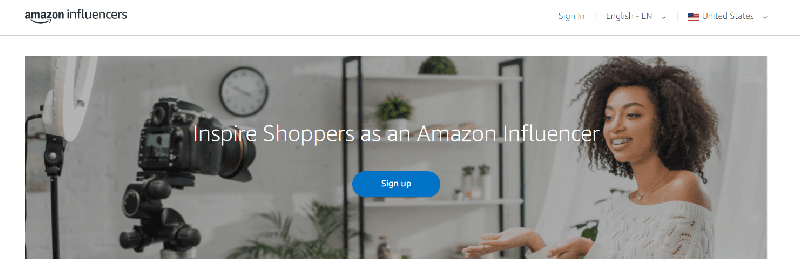
the amazon influencer program is an extension of the amazon associates program and allows influencers to earn fees for purchases made through referral links shared on social media and other online channels.
Influencers are given a unique URL to share and are credited for any purchases that originate from their links. This program enables influencers to leverage their reach to earn fees from purchases made on Amazon.com. It is free to join and open to social media influencers with large followings. A history of promoting products through their blogs, videos, or other content. For a deeper dive, explore our guide on Content Creators Become One.
Requirements to Join Amazon Influencer Marketing

In order to join Amazon’s Influencer Marketing program, you must meet the following criteria:
- Have an audience: You must have an active and engaged audience on either YouTube, Instagram, Twitter, or Facebook.
- Have a public profile: You must have a public profile on the platforms listed above.
- Have an Amazon account: You must have an Amazon account in order to participate in the program.
- Have a blog or website: You must have a blog or website that is updated regularly.
- Have an Amazon Storefront: You must create an Amazon Storefront in order to participate in the program.
- Have quality content: You must create quality content relevant to Amazon products.
- Follow the guidelines: You must follow Amazon’s guidelines for influencer marketing.
Once you meet these requirements, you can apply to join Amazon’s Influencer Marketing program.
How can you earn with the Amazon Influencer Marketing Program?
The Amazon Influencer Program is a great way for influencers to earn money online. It allows influencers to create their own page on Amazon and promote products from the Amazon marketplace. When someone purchases items from their page, they receive a commission from Amazon.
To get started with the Amazon Influencer Program, influencers will first need to create an Amazon Associates account. This account is free and requires basic information such as name, address, and payment information. Once the account is created, influencers can then apply to become Amazon influencer. The application process includes providing information about their social media presence, website or blog, and how they plan to promote Amazon products.
Once approved, influencers will receive a custom URL for their Amazon Influencer page. This page can be used to promote products from the Amazon marketplace. Influencers can also create lists, polls, and quizzes to further engage their audience.
When someone purchases a product from the influencer’s page, the influencer will receive a commission on the sale. The amount of commission varies depending on the product and the category it’s in. Amazon also offers a variety of promotional tools to help influencers promote their pages and products.
The Amazon Influencer Program is a great way for influencers to earn money online. With a little bit of effort, influencers can create a successful page and start earning commissions from Amazon.
How to Promote the Amazon Influencer Marketing Program?
- Create social media campaigns: Leverage your social media channels to create campaigns around the Amazon Influencer Program. Utilize content such as images, videos, and other visuals to drive engagement and awareness.
- Leverage influencers: Reach out to influencers in your niche and ask them to promote the Amazon Influencer Program. This will help build credibility and trust in the program.
- Create blog content: Create content around the program on your blog or website. Detail the benefits of the program and why it’s a great opportunity for influencers.
- Leverage email marketing: Use email marketing campaigns to reach out to your current subscribers and ask them to join the Amazon Influencer Program.
- Participate in forums: Engage in conversations in relevant forums and answer any questions related to the program. This will help spread awareness of the program and potentially lead to more sign-ups.
- Utilize existing relationships: Reach out to partners and other businesses that you already have relationships with and encourage them to promote the Amazon Influencer Program.
- Partner with brands: Reach out to brands and offer to partner with them to promote the Amazon Influencer Program. Ask them to feature the program in their newsletters or on their website.
- Use paid advertising: Utilize paid advertising platforms such as Google Ads or Facebook Ads to promote the Amazon Influencer Program.
- Leverage user-generated content: Ask your influencers to post content about the Amazon Influencer Program on their social media accounts. This will help spread awareness and encourage more sign-ups.
Is Amazon Influencer Program Profitable?
The Amazon Influencer Program is a new way for influencers to monetize their social media presence. The program allows influencers to create a personalized page on Amazon to promote products and earn commissions on their sales. While the program has the potential to be profitable, it is important to note that it is still in its early stages. There is no guarantee of success.
In order to be successful as an Amazon Influencer, it is important to have an established, engaged audience that is passionate about the products and services being promoted. Additionally, influencers must create content regularly and use effective marketing techniques to drive traffic to their page.
It is also important to note that Amazon Influencers will not make a lot of money from each sale. The commission rate is typically quite low, so it is important to focus on building a large audience in order to generate significant income.
How Can A Marketing Firm Help You in Amazon Influencer Marketing?
Amazon SEO Company can help you with Amazon Influencer Marketing by providing a comprehensive strategy for how to reach your target audience. The firm can help you identify the best influencers to work with, create content that resonates with your target audience,. Optimize your campaigns for maximum exposure and engagement.
Additionally, the marketing firm can help with tracking. Measuring the success of your campaigns and provide guidance on how to adjust your strategy to ensure your success.
Overall, the Amazon Influencer Program has the potential to be profitable, but it requires hard work, dedication, and a passion for the products being promoted.
Frequently Asked Questions
Q: What is this guide about?
This comprehensive guide provides strategies and best practices for achieving success. Following these approaches can help improve your results and competitive advantage.
Q: How long does it take to see results?
Results vary. Most strategies require 3-6 months before significant improvements. Ongoing optimization and consistency are essential for sustainable success.
Q: Do I need professional help?
While basic implementation can be done independently, professional guidance often accelerates results and helps avoid costly mistakes.
Q: What are the most important factors for success?
Key factors include thorough research, consistent execution, quality over quantity, regular performance monitoring, and adapting to industry changes.
Q: How do I measure success?
Track KPIs like traffic, conversions, revenue, and engagement rates. Regular analysis helps identify areas for improvement.
Q: What channels should I focus on?
Most businesses benefit from SEO, content marketing, social media, and paid advertising. Start where your target audience is most active.
The Evolution of Digital Marketing: From Traditional to Modern Approaches
Digital marketing has undergone a remarkable transformation over the past two decades, evolving from simple banner advertisements. Email campaigns to sophisticated, data-driven strategies that leverage artificial intelligence and machine learning. Understanding this evolution provides valuable context for developing effective modern marketing strategies that resonate with today’s consumers.
The early days of digital marketing were characterized by interruptive advertising tactics that prioritized visibility over relevance. Companies spent significant budgets on display ads that reached broad audiences but delivered limited engagement. As consumer behavior shifted and technology advanced, marketers began recognizing the value of permission-based marketing. Targeted approaches that delivered personalized messages to specific audience segments.
Today’s digital marketing landscape demands integrated approaches that combine multiple channels and tactics into cohesive customer experiences. The most successful businesses recognize that modern consumers interact with brands through complex, non-linear journeys that span multiple devices and platforms. Meeting customers where they are requires sophisticated targeting capabilities, real-time personalization, and seamless cross-channel experiences.
The integration of marketing technology has enabled unprecedented levels of automation. Optimization, allowing marketers to deliver the right message to the right person at the right time. These capabilities have transformed marketing from an art to a science, enabling continuous improvement based on real-time performance data and predictive analytics.
Strategic Content Development for Search Engine Success
Content remains the foundation of successful digital marketing, serving as the primary mechanism for attracting organic traffic, building brand authority, and engaging target audiences. Developing a comprehensive content strategy requires understanding search intent, creating valuable resources, and optimizing for both search engines and human readers.
Effective content addresses specific search queries while providing genuine value to readers. This requires deep understanding of your audience’s needs, questions, and pain points. The best content answers questions comprehensively, provides actionable insights, and offers unique perspectives that readers cannot find elsewhere.
Content optimization extends beyond keyword placement to include structural elements, readability, and multimedia integration. Well-structured content with clear headings, bullet points, and visual elements performs better in search results while delivering superior user experiences. Mobile optimization is particularly critical as mobile traffic continues growing.
Content promotion and distribution are equally important as creation. Even excellent content delivers limited results if target audiences cannot discover it. Strategic distribution leverages social media, email marketing, influencer partnerships, and paid promotion to maximize content reach and impact.
Data Analytics and Performance Measurement Fundamentals
Modern marketing success depends heavily on sophisticated analytics capabilities that enable data-driven decision making. Understanding which metrics matter most and how they connect to business outcomes allows continuous optimization of marketing efforts and improved return on investment.
Essential marketing metrics include traffic volume and sources, engagement rates, conversion rates, customer acquisition costs, and lifetime value. Each metric provides insights into different aspects of marketing performance, and comprehensive analysis reveals the full picture of marketing effectiveness.
Attribution modeling helps marketers understand how different touchpoints contribute to conversions. Multi-touch attribution provides more accurate pictures of customer journeys than last-click attribution, enabling better allocation of marketing budgets across channels and campaigns.
Advanced analytics approaches segment data by multiple dimensions to identify patterns and opportunities that aggregate data might miss. Understanding audience segments, channel performance, and campaign effectiveness enables continuous optimization and improved results over time.
Building Brand Authority Through Thought Leadership
Establishing thought leadership in your industry provides significant competitive advantages, including increased brand awareness, customer trust, and organic visibility. Thought leadership requires consistent creation of valuable content that demonstrates expertise and unique insights.
Effective thought leadership content addresses emerging trends, challenges conventional wisdom, and provides actionable guidance that readers can apply to their own situations. This type of content positions your brand as an authority that audiences can trust for reliable information and guidance.
Building thought leadership requires sustained effort over time, with consistent publication of high-quality content that addresses relevant industry topics. The most successful thought leadership strategies identify unique perspectives and expertise areas that differentiate your brand from competitors.
Distribution amplifies thought leadership impact. Strategic promotion through social media, email marketing, industry publications, and speaking opportunities extends reach and builds recognition among target audiences.
Maximizing Return on Marketing Investment
Proving and maximizing marketing return on investment requires clear objectives, sophisticated tracking, and continuous optimization. The most successful marketing organizations treat marketing as an investment that must deliver measurable returns rather than an expense that cannot be quantified.
ROI calculation requires understanding customer lifetime value, acquisition costs, and the contribution of marketing activities to revenue generation. These calculations enable informed budget allocation decisions and help identify the most effective marketing tactics for your specific business.
Continuous testing and optimization improve marketing performance over time. A/B testing, multivariate testing, and iterative improvement processes enable identification of optimal approaches and continuous enhancement of marketing effectiveness.
Marketing automation improves efficiency while enabling personalization at scale. Automating routine tasks frees marketing teams to focus on strategic initiatives while maintaining consistent customer experiences across touchpoints.
Future-Proofing Your Digital Marketing Strategy
The digital marketing landscape continues evolving rapidly, with emerging technologies, changing consumer behaviors, and new platforms creating both challenges and opportunities. Future-proofing your strategy requires staying current with trends while maintaining focus on fundamental marketing principles.
Artificial intelligence and machine learning continue transforming marketing capabilities, enabling more sophisticated targeting, personalization, and optimization. Businesses that embrace these technologies gain competitive advantages through improved efficiency and effectiveness.
Privacy regulations and changes to third-party cookies require adaptation of tracking and targeting approaches. First-party data strategies and consent-based marketing become increasingly important as the industry transitions to a privacy-focused environment.
Voice search, visual search, and AI-powered search experiences create new optimization requirements. Adapting content and technical strategies for these emerging search modalities positions businesses for success in evolving search environments.
Conclusion: Embracing Digital Marketing for Sustainable Business Growth
The digital marketing landscape presents unprecedented opportunities for businesses willing to invest in building their online presence. Success requires strategic approach, consistent effort, and willingness to adapt to changing technologies and consumer behaviors. By focusing on delivering genuine value to your audience and continuously optimizing based on data, your business can achieve sustainable growth through digital marketing.
Remember that digital marketing is an ongoing commitment rather than a one-time effort. The businesses that succeed view marketing as a strategic investment that delivers compounding returns over time. Stay focused on your objectives, measure results consistently, and maintain patience required for building lasting success in the dynamic digital environment.
The Evolution of Digital Marketing Strategy
Digital marketing has transformed dramatically over the past decade, evolving from simple banner advertisements to sophisticated, data-driven strategies that leverage artificial intelligence and machine learning. Understanding this evolution provides context for developing effective modern marketing strategies that resonate with today’s consumers.
Modern digital marketing requires integrated approaches combining multiple channels into cohesive customer experiences. The most successful businesses recognize that consumers interact with brands through complex journeys spanning multiple devices and platforms.
Content Marketing Best Practices
Content remains the foundation of successful digital marketing, serving as the primary mechanism for attracting organic traffic, building brand authority, and engaging target audiences. Effective content addresses specific search queries while providing genuine value to readers through comprehensive answers and actionable insights.
Data-Driven Marketing Decisions
Modern marketing success depends on sophisticated analytics enabling data-driven decisions. Understanding which metrics connect to business outcomes allows continuous optimization and improved return on investment through testing and iterative improvement.
Building Brand Authority
Establishing thought leadership provides significant competitive advantages including increased brand awareness and customer trust. Effective thought leadership addresses emerging trends, challenges conventional wisdom, and provides actionable guidance.
Maximizing Marketing ROI
Proving marketing ROI requires clear objectives, sophisticated tracking, and continuous optimization. The most successful marketing organizations treat marketing as an investment delivering measurable returns through continuous testing.
Learn More: Home
-
 By Guy Sheetrit
- Dec 29, 2022
 By Guy Sheetrit


