Digital advertising has helped marketers immensely to reserve a space to showcase their brand. It cannot be denied that this revolutionized tactic can add more value to advertisers’ campaigns. Display ads vs native ads are the two widely used methods of advertising. Earlier display ads, often called banner ads, were the most effective.
Today, marketers are now focusing more on putting their advertising budget on native ads. But how do the two forms vary, and why are native ads so much more successful than display ads? Let us dive deep into the topic and show you curious people why you should opt for native ads today.
What Are Display Ads?
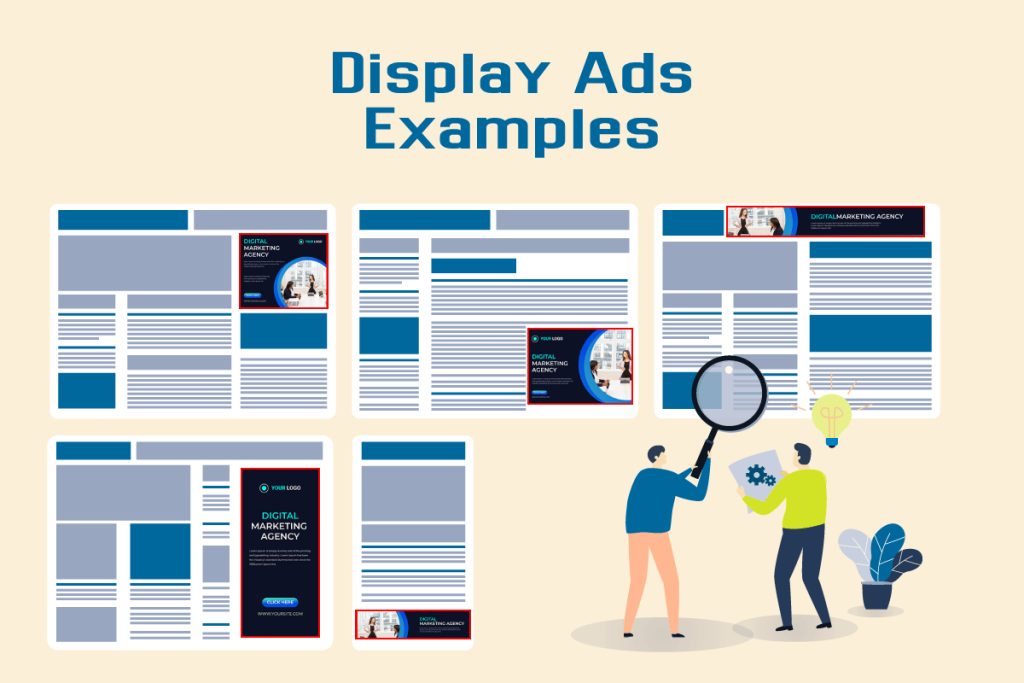
Display ads are more traditional ads that are typically displayed as banners or pop-ups. They are less likely to blend in with the surrounding content, but they can be more eye-catching and can reach a wider audience. Display ads are also more affordable to produce and can be more easily targeted. However, they can have lower CTRs and engagement rates than native ads.
Display ads are simply advertisements that appear online and look like banners, so they are also called banner ads. They are strips of clickable images that can be typically found at the top of a web page. Display ads can be placed in a variety of shapes and sizes. It includes films, interactive components, pop-up features, and more as web design becomes more intricate and imaginative. For a deeper dive, explore our guide on Microsoft Ads Bing Ads.
How Display Ads Are Used?
Instead of putting in SERP results display ads are shown on websites, apps, and social media platforms (Search Engine Results Pages). They can appear either at the top of the web page or cover a side of it. Display ads generally are static but sometimes they may pop up while scrolling through a website page or while watching movies.
What Are Native Ads?

Native ads are designed to blend in with the surrounding content, making them less intrusive than traditional display ads. This can lead to higher click-through rates (CTRs) and engagement rates. Native ads are also often more effective at driving brand awareness and consideration. However, they can be more expensive to produce and can be more difficult to target.
Native ads are integrated into a platform in a better user-friendly way. They match the layout and style of the platform. Native ads give an editorial appearance and feel to the users, with a softer selling technique. They frequently appear as sponsored content in social media news feeds and as placements in search results on search platforms.
How Native Ads Are Used?
Native advertisements are integrated into the layout and content of a website when they are created. They appear no different from the content on the website.
The use of sponsored paid content posts on websites and social networking platforms, pay-per-click in search engine marketing campaigns, magazines, and infomercials on TV are all some of the popular examples of native ads. Native advertising frequently takes the form of text, graphics, audio, videos, links, social media posts, etc naturally.
Major Differences Between Native Ads vs Display Ads: Which Is Best?
Native ads vs display ads can be considered new methods and old methods respectively. Therefore, there are some significant differences between using and deriving results from them. Even though both ways are contrasted sharply with respective websites, some features of native ads make them more worthwhile.
The reason for being more convenient, native ads are purposefully created to blend in with the platform on which they are displayed. This is simply why they are more powerful. Here are some more comparison factors of the main differences between display ads and native ads.
1. Match with the Site’s Layout and Style
When you start comparing display and native ads, the impacts of both on the website’s look and feel come first. Display ads cover the space at the top or side of a web page. It looks separate from the main content of the website.
Users may get distracted by the information available on the page. Display or banner ads may distract users. They can pop up on the screen anytime a user interacts with a website.
Native ads, on the other hand, give a more user-friendly appearance on a web page. Users feel less cognitive load on their minds while consuming content than from the display ads. They blend with the platform’s style and layout and do not irritate visitors to the site.
2. Selling Perspective
Display ads force users to make a hard sell. It seems like users take action forcefully, and while exiting, they may not even purchase as a result. These ads make unwanted pitches and sometimes can perform better. Yet, experts suggest not using it today, as people hate this strategy known as “hard selling.”
Native ads do not irritate users and use a soft-sell approach where they cannot derive results immediately, yet in the long term, they are considered more beneficial than the former ones. People can go through what an ad contains without having their reading flow disturbed.
3. Click Through Rates
The performance and revenue of native ads differ significantly from those of display ads. And talking about click-through rates is important when we are stating display & native ads differences. The click-through rate (CTR) for display ads is quite low, at just 0.05%. So, only five out of every 10,000 people who saw your advertisement will actually click.
The CTR for native ads is much higher than the display advertisements, as per the statistics. Additionally, native advertisements increase website traffic by motivating visitors to read or watch material that appeals to their preexisting interests. Site visitors do not feel compelled by the ads and they work as add-on information.
4. Cost Per Click
Native ads are proven to bring more traffic and revenue, so as expected, the cost per click is expensive. The reason is simple: people do not believe it is worthwhile to click on ads while browsing a website. So more clicks will lead to your ads. Hence, you need to pay accordingly.
Display ads win here when we talk about cost per click. It is less expensive than the one mentioned above. You don’t have to empty your pocket; with a fine budget, you can place your ads on any website as a banner.
5. Performance According to Platforms
Since native ads are more focused on making a large audience feel comfortable with the ads, they perform better on mobile. The majority of people’s time is spent on social media sites. And for that, they are provided with much better mobile apps with user interfaces. Native ads are widely used on mobile. Besides, display ads are said to perform better on desktops, so it is better to target people who use desktops to buy a space for a banner.
It is expected that you have gone through the complete article and have come to know which is better between the display vs native ads. If you are not familiar with ad campaigns and are planning to go for one to generate leads, look no further than OTT, which is a well-known SEO services company.
What to choose between Native Ads and Display Ads?
The best way to decide which type of ad is right for you is to test both native ads and display ads and see which one performs better for your specific goals.
Here are some factors to consider when choosing between native ads and display ads:
- Your target audience: Native ads are often more effective at targeting niche audiences, while display ads can reach a wider audience.
- Your budget: Native ads can be more expensive to produce, but they can also be more effective at driving conversions.
- Your goals: If your goal is to increase brand awareness, native ads may be a better choice. If your goal is to drive traffic to your website or generate leads, display ads may be a better choice.
Frequently Asked Questions
Q: What is this guide about?
This comprehensive guide provides strategies and best practices for achieving success in your marketing efforts. Following these approaches can help improve your results and competitive advantage.
Q: How long does it take to see results?
Results vary depending on consistency and implementation quality. Most strategies require 3-6 months of dedicated effort before significant improvements become visible. Ongoing optimization is essential.
Q: Do I need professional help?
While basic implementation can be done independently, professional guidance often accelerates results and helps avoid common mistakes. Consider experts if you lack internal resources.
Q: What are the most important factors for success?
Key success factors include thorough research, consistent execution, quality over quantity, regular performance monitoring, and adapting to industry changes.
Q: How do I measure success?
Success depends on your goals but typically involves tracking KPIs like traffic, conversions, revenue, and engagement rates. Regular analysis helps identify improvements.
Q: What digital marketing channels should I focus on?
The best channels depend on your audience. Most businesses benefit from SEO, content marketing, social media, and paid advertising. Start where your audience is most active. For a deeper dive, explore our guide on Healthcare Marketing Where now.
The Evolution of Digital Marketing: From Traditional to Modern Approaches
Digital marketing has undergone a remarkable transformation over the past two decades, evolving from simple banner advertisements and email campaigns to sophisticated, data-driven strategies that leverage artificial intelligence and machine learning. Understanding this evolution provides valuable context for developing effective modern marketing strategies that resonate with today’s consumers.
The early days of digital marketing were characterized by interruptive advertising tactics that prioritized visibility over relevance. Companies spent significant budgets on display ads that reached broad audiences but delivered limited engagement. As consumer behavior shifted and technology advanced, marketers began recognizing the value of permission-based marketing and targeted approaches that delivered personalized messages to specific audience segments.
Today’s digital marketing landscape demands integrated approaches that combine multiple channels and tactics into cohesive customer experiences. The most successful businesses recognize that modern consumers interact with brands through complex, non-linear journeys that span multiple devices and platforms. Meeting customers where they are requires sophisticated targeting capabilities, real-time personalization, and seamless cross-channel experiences. For a deeper dive, explore our guide on Snapchat Ads.
The integration of marketing technology has enabled unprecedented levels of automation and optimization, allowing marketers to deliver the right message to the right person at the right time. These capabilities have transformed marketing from an art to a science, enabling continuous improvement based on real-time performance data and predictive analytics.
Strategic Content Development for Search Engine Success
Content remains the foundation of successful digital marketing, serving as the primary mechanism for attracting organic traffic, building brand authority, and engaging target audiences. Developing a comprehensive content strategy requires understanding search intent, creating valuable resources, and optimizing for both search engines and human readers.
Effective content addresses specific search queries while providing genuine value to readers. This requires deep understanding of your audience’s needs, questions, and pain points. The best content answers questions comprehensively, provides actionable insights, and offers unique perspectives that readers cannot find elsewhere.
Content optimization extends beyond keyword placement to include structural elements, readability, and multimedia integration. Well-structured content with clear headings, bullet points, and visual elements performs better in search results while delivering superior user experiences. Mobile optimization is particularly critical as mobile traffic continues growing.
Content promotion and distribution are equally important as creation. Even excellent content delivers limited results if target audiences cannot discover it. Strategic distribution leverages social media, email marketing, influencer partnerships, and paid promotion to maximize content reach and impact.
Data Analytics and Performance Measurement Fundamentals
Modern marketing success depends heavily on sophisticated analytics capabilities that enable data-driven decision making. Understanding which metrics matter most and how they connect to business outcomes allows continuous optimization of marketing efforts and improved return on investment.
Essential marketing metrics include traffic volume and sources, engagement rates, conversion rates, customer acquisition costs, and lifetime value. Each metric provides insights into different aspects of marketing performance, and comprehensive analysis reveals the full picture of marketing effectiveness.
Attribution modeling helps marketers understand how different touchpoints contribute to conversions. Multi-touch attribution provides more accurate pictures of customer journeys than last-click attribution, enabling better allocation of marketing budgets across channels and campaigns.
Advanced analytics approaches segment data by multiple dimensions to identify patterns and opportunities that aggregate data might miss. Understanding audience segments, channel performance, and campaign effectiveness enables continuous optimization and improved results over time.
Building Brand Authority Through Thought Leadership
Establishing thought leadership in your industry provides significant competitive advantages, including increased brand awareness, customer trust, and organic visibility. Thought leadership requires consistent creation of valuable content that demonstrates expertise and unique insights.
Effective thought leadership content addresses emerging trends, challenges conventional wisdom, and provides actionable guidance that readers can apply to their own situations. This type of content positions your brand as an authority that audiences can trust for reliable information and guidance.
Building thought leadership requires sustained effort over time, with consistent publication of high-quality content that addresses relevant industry topics. The most successful thought leadership strategies identify unique perspectives and expertise areas that differentiate your brand from competitors.
Distribution amplifies thought leadership impact. Strategic promotion through social media, email marketing, industry publications, and speaking opportunities extends reach and builds recognition among target audiences.
Maximizing Return on Marketing Investment
Proving and maximizing marketing return on investment requires clear objectives, sophisticated tracking, and continuous optimization. The most successful marketing organizations treat marketing as an investment that must deliver measurable returns rather than an expense that cannot be quantified.
ROI calculation requires understanding customer lifetime value, acquisition costs, and the contribution of marketing activities to revenue generation. These calculations enable informed budget allocation decisions and help identify the most effective marketing tactics for your specific business.
Continuous testing and optimization improve marketing performance over time. A/B testing, multivariate testing, and iterative improvement processes enable identification of optimal approaches and continuous enhancement of marketing effectiveness.
Marketing automation improves efficiency while enabling personalization at scale. Automating routine tasks frees marketing teams to focus on strategic initiatives while maintaining consistent customer experiences across touchpoints.
Future-Proofing Your Digital Marketing Strategy
The digital marketing landscape continues evolving rapidly, with emerging technologies, changing consumer behaviors, and new platforms creating both challenges and opportunities. Future-proofing your strategy requires staying current with trends while maintaining focus on fundamental marketing principles.
Artificial intelligence and machine learning continue transforming marketing capabilities, enabling more sophisticated targeting, personalization, and optimization. Businesses that embrace these technologies gain competitive advantages through improved efficiency and effectiveness.
Privacy regulations and changes to third-party cookies require adaptation of tracking and targeting approaches. First-party data strategies and consent-based marketing become increasingly important as the industry transitions to a privacy-focused environment.
Voice search, visual search, and AI-powered search experiences create new optimization requirements. Adapting content and technical strategies for these emerging search modalities positions businesses for success in evolving search environments.
Conclusion: Embracing Digital Marketing for Sustainable Business Growth
The digital marketing landscape presents unprecedented opportunities for businesses willing to invest in building their online presence. Success requires strategic approach, consistent effort, and willingness to adapt to changing technologies and consumer behaviors. By focusing on delivering genuine value to your audience and continuously optimizing based on data, your business can achieve sustainable growth through digital marketing.
Remember that digital marketing is an ongoing commitment rather than a one-time effort. The businesses that succeed view marketing as a strategic investment that delivers compounding returns over time. Stay focused on your objectives, measure results consistently, and maintain patience required for building lasting success in the dynamic digital environment.
The Evolution of Digital Marketing Strategy
Digital marketing has transformed dramatically over the past decade, evolving from simple banner advertisements to sophisticated, data-driven strategies that leverage artificial intelligence and machine learning.
Modern digital marketing requires integrated approaches combining multiple channels into cohesive customer experiences.
Content Marketing Best Practices
Content remains the foundation of successful digital marketing, serving as the primary mechanism for attracting organic traffic, building brand authority, and engaging target audiences.
Data-Driven Marketing Decisions
Modern marketing success depends on sophisticated analytics enabling data-driven decisions.
Building Brand Authority
Establishing thought leadership provides significant competitive advantages including increased brand awareness and customer trust.
Maximizing Marketing ROI
Proving marketing ROI requires clear objectives, sophisticated tracking, and continuous optimization.
Learn More: Home

Mobile Advertising: A Complete Guide for Marketers and Businesses
The world of advertising, like technology, has evolved. The term of the day is mobile…
Read More →
How to Use Microsoft Ads (Bing Ads) to Boost Your Online Visibility and Sales
Do you remember Bing Ads ? They are now known as Microsoft Ads and should…
Read More →
Google Ads Manager: A Ultimate Guide For Publishers
You require a Google Ads Manager in case you are handling numerous Google Ads accounts.…
Read More →
Pay Per Call Advertising – A Comprehensive Guide for Beginners
Are you the one who wants to build sales immediately? Ready to begin searching for…
Read More →
Crypto Ad Networks For Beginners: A Look at the Most Popular Options
For your crypto-related ventures to reach the relevant audience, crypto advertising is crucial. While most…
Read More →-
 By Guy Sheetrit
- Jan 16, 2023
 By Guy Sheetrit