
For your crypto-related ventures to reach the relevant audience, crypto advertising is crucial. While most conventional ad networks, like Google AdSense, have outlawed cryptocurrency advertisements. You cannot offer crypto advertisements to their users on social media sites like Facebook and Twitter. These limitations put advertisers in a difficult situation and rob publishers of a reliable source of money.
Publishers produce excellent cryptocurrency content and generate a lot of traffic, but without advertisements, their efforts go unpaid. Also, advertisers miss out on reaching the targeted audience of these websites—a group of people who might be interested in their adverts. This conundrum is resolved by crypto ad networks, which give publishers and advertisers a place to combine their best interests.
what is a crypto ad network?
a platform that links cryptocurrency publishers and cryptocurrency advertisers are known as a crypto ad network.
It enables cryptocurrency initiatives and businesses to advertise their goods and services on forums, blogs, and websites with a cryptocurrency focus.
The primary distinction between bitcoin ad networks and Google AdSense-like services is that the latter only serves the cryptocurrency sector. As a result, crypto ad networks are aware of the specific requirements of this industry and can provide tailored advertising for optimum performance.
Why Crypto Ad Networks Matter in 2026
The cryptocurrency industry has experienced unprecedented growth, with blockchain technology and digital assets becoming mainstream investment vehicles. In 2026, the global crypto market capitalization exceeds several trillion dollars, with hundreds of millions of active users worldwide. This explosive growth has created an urgent need for specialized advertising platforms that can effectively reach crypto-native audiences.
Traditional advertising networks have consistently banned or restricted cryptocurrency-related advertisements due to regulatory uncertainty, fraud concerns, and reputational risks. Google, Facebook, Twitter, and Microsoft have all implemented varying degrees of restrictions on crypto advertising over the years. While some restrictions have eased slightly, navigating these platforms remains challenging for legitimate crypto businesses.
Crypto ad networks fill this critical gap by creating dedicated marketplaces where cryptocurrency publishers can monetize their content and advertisers can reach engaged crypto audiences. These platforms understand the unique dynamics of the crypto market, including the importance of reaching users at various stages of their investment journey—from curious beginners to experienced traders.
The decentralized nature of cryptocurrency also means that crypto ad networks often offer innovative payment options, including various cryptocurrencies. Stablecoins, which traditional platforms cannot match. This flexibility benefits both publishers who want to receive payments in digital assets and advertisers who hold cryptocurrency and want to spend it on advertising.
How to Choose the Right Crypto Ad Network
Selecting the appropriate crypto ad network requires careful consideration of several factors that can significantly impact your campaign’s success. Understanding these criteria will help you make informed decisions that align with your advertising goals and budget.
1. Audience Quality and Reach
The most critical factor is whether the network’s publisher base actually reaches your target audience. Examine the types of websites in their network—are they genuinely crypto-focused, or do they merely accept crypto ads alongside general content? High-quality crypto ad networks typically have relationships with established cryptocurrency news sites, forums, educational platforms, and community hubs.
2. Ad Formats and Creative Options
Different campaigns require different ad format. Some networks specialize in display banners, while others offer native advertising, pop-under ads, video ads, or newsletter sponsorships. Consider what formats best suit your message and creative assets.
3. Pricing Models and Minimums
Crypto ad networks typically offer various pricing models including CPM (cost per thousand impressions), CPC (cost per click), CPA (cost per action), and CPD (cost per day). Understand your goals—whether you’re focused on brand awareness, website traffic, or conversions—and choose a model that aligns.
4. Verification and Compliance
Given the regulatory landscape, many crypto ad networks implement verification processes for advertisers. While this can seem burdensome, it often indicates a more reputable platform that takes compliance seriously.
5. Payment Options and Security
Evaluate what payment methods are accepted—both for funding campaigns and receiving payments as a publisher. The best networks offer multiple options including major cryptocurrencies (BTC, ETH), stablecoins (USDT, USDC), and sometimes fiat currencies.
Crypto Ad Networks vs. Traditional Advertising Platforms
Understanding the fundamental differences between crypto ad networks and traditional advertising platforms helps advertisers make strategic decisions about where to allocate their budgets. Each approach offers distinct advantages and limitations.
Targeting Precision
Traditional platforms like Google Ads and Facebook offer sophisticated targeting based on user behavior, demographics, and interests. However, their crypto-related restrictions often prevent legitimate businesses from reaching potential customers. Crypto ad networks may offer less granular targeting but provide access to audiences that traditional platforms actively block.
Audience Engagement
Crypto audiences tend to be highly engaged with content related to their interests. Visitors to cryptocurrency blogs, news sites, and educational platforms are typically actively researching, investing, or trading. This engagement often translates to higher conversion rates for crypto-related offers compared to cold audiences on general platforms.
Cost Efficiency
While CPM rates on premium crypto ad networks can be competitive with general platforms, the lack of competition in the crypto advertising space sometimes results in lower costs per acquisition. With fewer advertisers competing for crypto-native inventory, savvy marketers can achieve favorable return on ad spend (ROAS).
Maximizing Your ROI with Crypto Ad Networks
Successfully leveraging crypto ad networks requires strategic optimization that accounts for the unique characteristics of the crypto market. Implementing these best practices will help you achieve maximum return on your advertising investment.
Creative Best Practices
Crypto audiences respond well to certain types of creative messaging. Highlight tangible benefits rather than technical features. Use clear calls-to-action that guide users to the next step in your funnel. Ensure your landing pages are optimized for conversion—crypto users typically have high expectations for user experience quality.
Landing Page Optimization
Your landing page must inspire trust immediately. Crypto users are particularly sensitive to security concerns and will quickly abandon sites that appear untrustworthy. Implement HTTPS, display security badges prominently, and ensure your value proposition is clear within seconds. For a deeper dive, explore our guide on Crypto Firms Must Definitely.
A/B Testing
The crypto market moves quickly, and audience preferences shift rapidly. Implement continuous A/B testing for ad copy, creative variations, and landing page elements. What works today may not work tomorrow as market sentiment changes.
Retargeting Campaigns
Crypto audiences typically require multiple touchpoints before converting. Set up robust retargeting campaigns to capture users who visited but didn’t convert.
1. Coinzilla

Launched in 2016, the advertising network Coinzilla has established a reputation as one of the most reliable networks for cryptocurrency advertising. More than 20,000 publications have been encouraged to monetize their websites, and it has promoted more than 200 companies.
The variety of customization choices offered by Coinzilla, including display, native, pop-up, and press release advertising, is fantastic. Native, CPM (cost-per-mile), pop-up, and other cryptocurrency advertising options are provided by Coinzilla. The business offers solutions that are incredibly flexible for both the advertisement itself and the creative process.
With a minimum deposit of 0.05 BTC, 0.5 ETH, or €5,000, respectively, Coinzilla also enables deposits. Payments made using Bitcoin, Ethereum, and fiat wire transfers. Monthly and weekly payments are made. Also, you can earn 10% through Coinzilla’s referral program when you introduce qualified consumers.
Pros
- High criteria for advertisers
- Referral system
- Solid client service
Cons
- Restrictive rules for websites
2. Bitmedia

When it comes to impressions and site visits, Bitmedia can boast impressive figures. 20,000 campaigns are currently being launched on the network by more than 5,000 cryptocurrency websites. It’s difficult to find a better ad network firm to expand your cryptocurrency project with over 1 billion impressions globally. 20 million unique visitors each month.
It employs targeting choices powered by artificial intelligence, such as geolocation, posting frequency, and timing. They provide clients with both CPM and CPC models in addition to rigorous verification procedures, ensuring that each seller may be manually confirmed.
Pros
- AI algorithm serves relevant users with ads
- Pleasant user interface
- Dependable methods of payment
Cons
- Favors cryptocurrency websites
3. Adshares

Adshares is another established business that specializes in promoting blockchain, cryptocurrency, and NFT projects. Adshares provides sponsored content on authoritative websites, premium blockchain banners, newsletters, and listings on exchanges in addition to banner ads.
The network provides a variety of ad formats, including CPA (cost-per-action), CPM, and pop-under campaigns. Because it doesn’t demand verification or have strict requirements for network membership, the platform makes advertising simple.
Pros
- Simple registration; no need for verification
- Access to premium websites and marketplaces
- Ads that can be modified
- Precise analytics
- Consistent payments
Cons
- Favors cryptocurrency websites
4. CoinTraffic

A sizable amount of traffic and impressions are generated by CoinTraffic each month thanks to its network of more than 400 publishers and 1,000 advertisers. Many advertising forms are available from CoinTraffic, however, its income model primarily supports CPM and pop-up advertising types.
Pros
- Adaptable campaigns
- Good impression and traffic rates
- High-quality visitors
- Accepts both cash and bitcoin payments
Cons
- CPC ad model absent
- Strict rules for websites
5. CoinAd

In contrast to the majority of cryptocurrency ad networks, CoinAd has a unique policy whereby they send invitations to publications who wish to join their platform. Publishers who are invited gain access to a number of benefits.
Pros
- Amazing sites
- Weekly payments you can count on
Cons
- Invite-only rule
6. A-ADS
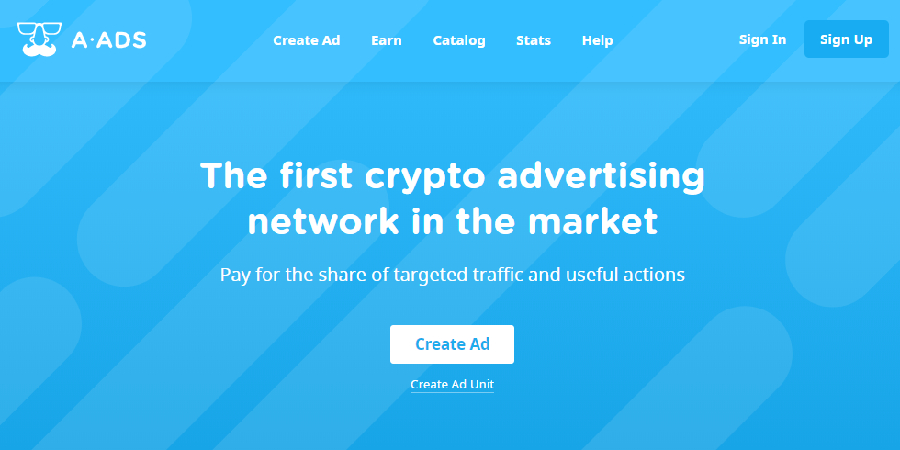
One of the earliest crypto ad networks is A-ADS, or Anonymous Advertising, which was established in 2011. With over 70 million impressions and over 60,000 clicks every day, it is still a sensible option for publishers today.
Advertisers can customize A-Ads with features like geotargeting and ad placement options, and the interface is user-friendly. A-Ads also employs a CPD (cost-per-day) model, which is uncommon among crypto ad networks, in addition to CPA, CPM, and affiliate programs.
Pros
- Convenient and dependable customer service
- There is no strict verification process
- Ad campaigns that can be altered
- Anonymity
Cons
- Only takes cryptocurrency payments
Crypto networks have developed into safe practical methods promoting a variety of crypto projects content from NFTs crypto influencers’. Right audience these platforms allow the promotion of adverts and generation of more revenue for publisher websites while charging rates that provide advertisers with better returns on their advertising spend
You can serve high-quality ads and get good returns on your cryptocurrency project by selecting crypto network OTT’. S digital marketing experts contact us to get features that best suitable your publisher advertising needs. For a deeper dive, explore our guide on Proven ICO Marketing Promote.
Frequently Asked Questions About Crypto Ad Networks
Are crypto ad networks safe to use?
Reputable crypto ad networks implement rigorous verification procedures and quality controls to ensure safe advertising environments. However, the industry does have varying standards. Research network reputation, read reviews, and start with small test campaigns before committing significant budgets.
Why can’t I use Google Ads for my crypto business?
Google’s advertising policies restrict many cryptocurrency-related advertisements, including exchanges, wallets, and initial coin offerings. While some crypto businesses have found ways to advertise within Google’s guidelines, the restrictions are extensive and change frequently.
How much do crypto ad network campaigns cost?
Costs vary significantly across networks and depend on factors like ad format, targeting parameters, and competition. CPM rates typically range from $2 to $50+ depending on the network and placement quality.
Can I pay for crypto ads with cryptocurrency?
Yes, most crypto ad networks accept payment in various cryptocurrencies including Bitcoin (BTC), Ethereum (ETH), and stablecoins like USDT or USDC. Some networks also accept fiat payments.
What types of crypto businesses can advertise?
Most crypto ad networks accommodate a wide range of cryptocurrency businesses including exchanges, wallet providers, DeFi protocols, NFT marketplaces, blockchain infrastructure companies, and crypto media outlets. For a deeper dive, explore our guide on Crypto Marketing Companies Blockchain.
How do I measure success in crypto advertising?
Key metrics include impressions, clicks, click-through rates (CTR), conversions, and cost per acquisition (CPA). Track these metrics consistently and compare performance across different networks and campaigns.
What’s the difference between CPM and CPC pricing models?
CPM (cost per thousand impressions) charges based on how many times your ad is displayed, regardless of clicks. CPC (cost per click) charges only when someone clicks your ad. CPM is better for brand awareness campaigns while CPC suits performance-focused campaigns.
For a deeper dive, explore our guide on Blockchain Marketing Beat Competition.
The Evolution of Digital Marketing: From Traditional to Modern Approaches
Digital marketing has undergone a remarkable transformation over the past two decades, evolving from simple banner advertisements. Email campaigns to sophisticated, data-driven strategies that leverage artificial intelligence and machine learning. Understanding this evolution provides valuable context for developing effective modern marketing strategies that resonate with today’s consumers.
The early days of digital marketing were characterized by interruptive advertising tactics that prioritized visibility over relevance. Companies spent significant budgets on display ads that reached broad audiences but delivered limited engagement. As consumer behavior shifted and technology advanced, marketers began recognizing the value of permission-based marketing. Targeted approaches that delivered personalized messages to specific audience segments.
Today’s digital marketing landscape demands integrated approaches that combine multiple channels and tactics into cohesive customer experiences. The most successful businesses recognize that modern consumers interact with brands through complex, non-linear journeys that span multiple devices and platforms. Meeting customers where they are requires sophisticated targeting capabilities, real-time personalization, and seamless cross-channel experiences.
The integration of marketing technology has enabled unprecedented levels of automation. Optimization, allowing marketers to deliver the right message to the right person at the right time. These capabilities have transformed marketing from an art to a science, enabling continuous improvement based on real-time performance data and predictive analytics.
Strategic Content Development for Search Engine Success
Content remains the foundation of successful digital marketing, serving as the primary mechanism for attracting organic traffic, building brand authority, and engaging target audiences. Developing a comprehensive content strategy requires understanding search intent, creating valuable resources, and optimizing for both search engines and human readers.
Effective content addresses specific search queries while providing genuine value to readers. This requires deep understanding of your audience’s needs, questions, and pain points. The best content answers questions comprehensively, provides actionable insights, and offers unique perspectives that readers cannot find elsewhere.
Content optimization extends beyond keyword placement to include structural elements, readability, and multimedia integration. Well-structured content with clear headings, bullet points, and visual elements performs better in search results while delivering superior user experiences. Mobile optimization is particularly critical as mobile traffic continues growing.
Content promotion and distribution are equally important as creation. Even excellent content delivers limited results if target audiences cannot discover it. Strategic distribution leverages social media, email marketing, influencer partnerships, and paid promotion to maximize content reach and impact.
Data Analytics and Performance Measurement Fundamentals
Modern marketing success depends heavily on sophisticated analytics capabilities that enable data-driven decision making. Understanding which metrics matter most and how they connect to business outcomes allows continuous optimization of marketing efforts and improved return on investment.
Essential marketing metrics include traffic volume and sources, engagement rates, conversion rates, customer acquisition costs, and lifetime value. Each metric provides insights into different aspects of marketing performance, and comprehensive analysis reveals the full picture of marketing effectiveness.
Attribution modeling helps marketers understand how different touchpoints contribute to conversions. Multi-touch attribution provides more accurate pictures of customer journeys than last-click attribution, enabling better allocation of marketing budgets across channels and campaigns.
Advanced analytics approaches segment data by multiple dimensions to identify patterns and opportunities that aggregate data might miss. Understanding audience segments, channel performance, and campaign effectiveness enables continuous optimization and improved results over time.
Building Brand Authority Through Thought Leadership
Establishing thought leadership in your industry provides significant competitive advantages, including increased brand awareness, customer trust, and organic visibility. Thought leadership requires consistent creation of valuable content that demonstrates expertise and unique insights.
Effective thought leadership content addresses emerging trends, challenges conventional wisdom, and provides actionable guidance that readers can apply to their own situations. This type of content positions your brand as an authority that audiences can trust for reliable information and guidance.
Building thought leadership requires sustained effort over time, with consistent publication of high-quality content that addresses relevant industry topics. The most successful thought leadership strategies identify unique perspectives and expertise areas that differentiate your brand from competitors.
Distribution amplifies thought leadership impact. Strategic promotion through social media, email marketing, industry publications, and speaking opportunities extends reach and builds recognition among target audiences.
Maximizing Return on Marketing Investment
Proving and maximizing marketing return on investment requires clear objectives, sophisticated tracking, and continuous optimization. The most successful marketing organizations treat marketing as an investment that must deliver measurable returns rather than an expense that cannot be quantified.
ROI calculation requires understanding customer lifetime value, acquisition costs, and the contribution of marketing activities to revenue generation. These calculations enable informed budget allocation decisions and help identify the most effective marketing tactics for your specific business.
Continuous testing and optimization improve marketing performance over time. A/B testing, multivariate testing, and iterative improvement processes enable identification of optimal approaches and continuous enhancement of marketing effectiveness.
Marketing automation improves efficiency while enabling personalization at scale. Automating routine tasks frees marketing teams to focus on strategic initiatives while maintaining consistent customer experiences across touchpoints.
Future-Proofing Your Digital Marketing Strategy
The digital marketing landscape continues evolving rapidly, with emerging technologies, changing consumer behaviors, and new platforms creating both challenges and opportunities. Future-proofing your strategy requires staying current with trends while maintaining focus on fundamental marketing principles.
Artificial intelligence and machine learning continue transforming marketing capabilities, enabling more sophisticated targeting, personalization, and optimization. Businesses that embrace these technologies gain competitive advantages through improved efficiency and effectiveness.
Privacy regulations and changes to third-party cookies require adaptation of tracking and targeting approaches. First-party data strategies and consent-based marketing become increasingly important as the industry transitions to a privacy-focused environment.
Voice search, visual search, and AI-powered search experiences create new optimization requirements. Adapting content and technical strategies for these emerging search modalities positions businesses for success in evolving search environments.

Mobile Advertising: A Complete Guide for Marketers and Businesses
The world of advertising, like technology, has evolved. The term of the day is mobile…
Read More →
How to Use Microsoft Ads (Bing Ads) to Boost Your Online Visibility and Sales
Do you remember Bing Ads ? They are now known as Microsoft Ads and should…
Read More →
Proven ICO Marketing Strategies to Promote Your Project
The cryptocurrency industry’s rapid and robust growth only made the upgradation of initial coin offerings…
Read More →
Google Ads Manager: A Ultimate Guide For Publishers
You require a Google Ads Manager in case you are handling numerous Google Ads accounts.…
Read More →
Pay Per Call Advertising – A Comprehensive Guide for Beginners
Are you the one who wants to build sales immediately? Ready to begin searching for…
Read More →-
 By Guy Sheetrit
- Mar 6, 2023
 By Guy Sheetrit


