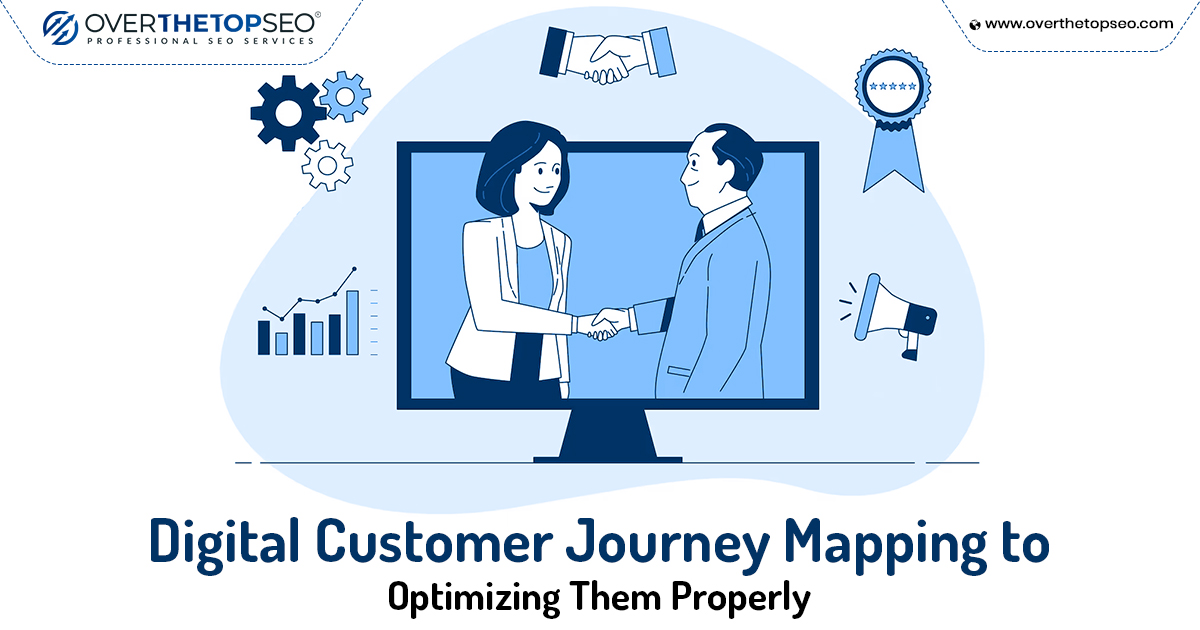
The customer journey has become significantly more complicated as a result of digital technology’s proliferation of points of contact between firms and consumers.
The latest epidemic has furthered this trend by quickly converting “brick and store” shoppers into online shoppers.
In this manual, you’ll learn why understanding the digital customer journey is essential to business success and how to enhance it through examples of motivating real-world customer trips.
Explore more in our digital marketing guide and social media marketing resources.
What is the Digital Customer Journey?
The path taken by an internet user from the awareness stage all the way up to the purchase stage is known as the “digital customer journey.”
In essence, it includes each and every online encounter that occurs between a buyer and a company during the purchasing process.
In some circumstances, the digital customer journey might go beyond making a purchase or signing up for a subscription and include client loyalty. To enhance the customer’s understanding and experience of their just purchased goods, the brand could, for instance, provide bespoke post-sale offers or customized material. For a deeper dive, explore our guide on SEO Freelancer Mistakes Tell.
The Impact of Digitization on Customer Experience
Due to the extensive and intimate ties, they developed over time with their clients, the banking and insurance industries were initially primarily those that examined the customer journey in depth.
Yet now, any firm that recognizes the scope and significance of digital is talking a lot about the digital customer experience.
The recent digital revolution has altered this journey by introducing new phases, such as websites and blogs, alongside more conventional ones, like physical stores, TV and radio ads, and catalogs. The development of these new marketing platforms, closely followed by social media, voice assistants, chatbots, and even display advertising, has complicated the digital customer journey on multiple levels.
Also, the client journey often takes multiple forms because each industry is the same. For instance, in a hospital setting, we refer to it as the “patient journey.” The path of a patient, from booking an appointment online to reviewing the results, differs greatly from the route of a client looking to buy a new kitchen.
The Many Phases of a Customer’s Digital Journey
There is some truth to the claim that the buyer’s journey has as many stages in the digital era as there are sand grains on the beach. Indeed, you wouldn’t be too far off.
You’ll be relieved to learn that regardless of the business, there are three crucial buying stages that span every consumer journey. Let’s look at this…
1. Becoming aware: the discovery stage
When your customer recognizes they need something and don’t have it, they are in the discovery stage. This might involve, for instance, buying a second bike that is more suited for cycling to work or replacing a damaged refrigerator.
The user then does what? To conduct some studies, they use the internet. As a brand, you must therefore ensure that you address their inquiries. Although you aren’t yet making a sale to them, by responding to their inquiries, they are beginning to believe that you are an authority on the subject. You’ll write tutorials, blog posts, and e-books as the content you produce for the awareness stage.
2. Consideration: the evaluation phase
The consumer will begin to consider which solution is ideal for them after consulting a variety of sources to help solve their issue.
In order to assess their options and select the best choice for their budget, they will study buying guides, check out customer reviews, and watch product videos. For a deeper dive, explore our guide on Product Launch Checklist.
In order to convince your potential customers that you are their best choice, you must, as a brand, ensure that you have this content available.
2. Decision: the selection phase
The last step is the decision-making phase. Consumers must now select from the different options available after knowing exactly which product would satisfy their demands. It’s time for you as a brand to make sure you have the appropriate material to show how you have an advantage over your rivals.
If you can, why not offer a free trial period so the buyer may decide for themselves? Being kind can help tremendously if there are any remaining barriers, so do your best!
Why Study Your Online Customer’s Experience?
Digital customer journey mapping offers a number of benefits, including:
- Identifying the customer’s sources of friction that cause them to change, postpone, or cancel their project
- Improving knowledge of consumer habits and needs to provide them with the most appropriate content at the best time
- Giving you information so you may focus your marketing efforts on the most lucrative or promising opportunities
How to Optimize Your Digital Customer Journey?
Adopt an omnichannel strategy.
The client journey must now take into account the needs of many channels.
To do this, we must use an “omnichannel” strategy that prioritizes each step of the trip equally.
The purpose? is to provide a “seamless” user experience that is uniform in all mediums, including your website, social media, and phone.
Compartmentalization is no longer necessary.
Get everyone involved
It takes work to redesign and improve your digital consumer journey. In fact, it may trigger significant adjustments inside your company.
It is crucial to include all staff in the process in order to sustain production and consistency as you enhance the client journey.
The input from each area will be extremely helpful in developing a “concrete” plan based on trustworthy data.
Personalize the experience
Personalization can help you create a difference and stand out in the crowd in the oversaturated market of today.
Yet, effectively personalizing your journey necessitates a thorough awareness of your business objectives as well as a precise knowledge of your target personas.
After taking care of these issues, you’ll be able to choose the material to show on your website or application based on factors like age, geography, areas of interest, past searches, or purchases.
You can achieve this with the use of Contentsquare’s customer journey analysis tools.
Examples of Digital Customer Journeys to Wrap Things Up.
Without giving some examples of diverse and inspiring digital consumer journeys, we couldn’t call this essay a success.
1. Digital Experience
This customer journey exemplifies how a chocolate brand may attract new customers, from the random street-level discovery of items through the creation of a genuine brand ambassador.
2. Zendesk
In order to wrap up, let’s look at a digital customer journey example from Zendesk that demonstrates the dynamics of client acquisition, retention, and loss.
3. UXFirm
This second example from UXFirm emphasizes the consumer experience at each level, from awareness through purchase, and has a different goal.
4. WCIG
The final illustration goes into great depth on each stage and challenge that people with disabilities encounter when working. A highly intricate (but instructive) illustration of a customer journey!
Frequently Asked Questions
Q: What is this guide about?
This comprehensive guide provides strategies and best practices for achieving success in your marketing efforts. Following these approaches can help improve your results and competitive advantage.
Q: How long does it take to see results?
Results vary depending on consistency and implementation quality. Most strategies require 3-6 months of dedicated effort before significant improvements become visible. Ongoing optimization is essential.
Q: Do I need professional help?
While basic implementation can be done independently, professional guidance often accelerates results and helps avoid common mistakes. Consider experts if you lack internal resources.
Q: What are the most important factors for success?
Key success factors include thorough research, consistent execution, quality over quantity, regular performance monitoring, and adapting to industry changes.
Q: How do I measure success?
Success depends on your goals but typically involves tracking KPIs like traffic, conversions, revenue, and engagement rates. Regular analysis helps identify improvements.
Q: What digital marketing channels should I focus on?
The best channels depend on your audience. Most businesses benefit from SEO, content marketing, social media, and paid advertising. Start where your audience is most active.
The Evolution of Digital Marketing: From Traditional to Modern Approaches
Digital marketing has undergone a remarkable transformation over the past two decades, evolving from simple banner advertisements and email campaigns to sophisticated, data-driven strategies that leverage artificial intelligence and machine learning. Understanding this evolution provides valuable context for developing effective modern marketing strategies that resonate with today’s consumers.
The early days of digital marketing were characterized by interruptive advertising tactics that prioritized visibility over relevance. Companies spent significant budgets on display ads that reached broad audiences but delivered limited engagement. As consumer behavior shifted and technology advanced, marketers began recognizing the value of permission-based marketing and targeted approaches that delivered personalized messages to specific audience segments.
Today’s digital marketing landscape demands integrated approaches that combine multiple channels and tactics into cohesive customer experiences. The most successful businesses recognize that modern consumers interact with brands through complex, non-linear journeys that span multiple devices and platforms. Meeting customers where they are requires sophisticated targeting capabilities, real-time personalization, and seamless cross-channel experiences.
The integration of marketing technology has enabled unprecedented levels of automation and optimization, allowing marketers to deliver the right message to the right person at the right time. These capabilities have transformed marketing from an art to a science, enabling continuous improvement based on real-time performance data and predictive analytics.
Strategic Content Development for Search Engine Success
Content remains the foundation of successful digital marketing, serving as the primary mechanism for attracting organic traffic, building brand authority, and engaging target audiences. Developing a comprehensive content strategy requires understanding search intent, creating valuable resources, and optimizing for both search engines and human readers. For a deeper dive, explore our guide on Color Psychology Marketing.
Effective content addresses specific search queries while providing genuine value to readers. This requires deep understanding of your audience’s needs, questions, and pain points. The best content answers questions comprehensively, provides actionable insights, and offers unique perspectives that readers cannot find elsewhere.
Content optimization extends beyond keyword placement to include structural elements, readability, and multimedia integration. Well-structured content with clear headings, bullet points, and visual elements performs better in search results while delivering superior user experiences. Mobile optimization is particularly critical as mobile traffic continues growing.
Content promotion and distribution are equally important as creation. Even excellent content delivers limited results if target audiences cannot discover it. Strategic distribution leverages social media, email marketing, influencer partnerships, and paid promotion to maximize content reach and impact.
Data Analytics and Performance Measurement Fundamentals
Modern marketing success depends heavily on sophisticated analytics capabilities that enable data-driven decision making. Understanding which metrics matter most and how they connect to business outcomes allows continuous optimization of marketing efforts and improved return on investment.
Essential marketing metrics include traffic volume and sources, engagement rates, conversion rates, customer acquisition costs, and lifetime value. Each metric provides insights into different aspects of marketing performance, and comprehensive analysis reveals the full picture of marketing effectiveness.
Attribution modeling helps marketers understand how different touchpoints contribute to conversions. Multi-touch attribution provides more accurate pictures of customer journeys than last-click attribution, enabling better allocation of marketing budgets across channels and campaigns.
Advanced analytics approaches segment data by multiple dimensions to identify patterns and opportunities that aggregate data might miss. Understanding audience segments, channel performance, and campaign effectiveness enables continuous optimization and improved results over time.
Building Brand Authority Through Thought Leadership
Establishing thought leadership in your industry provides significant competitive advantages, including increased brand awareness, customer trust, and organic visibility. Thought leadership requires consistent creation of valuable content that demonstrates expertise and unique insights.
Effective thought leadership content addresses emerging trends, challenges conventional wisdom, and provides actionable guidance that readers can apply to their own situations. This type of content positions your brand as an authority that audiences can trust for reliable information and guidance.
Building thought leadership requires sustained effort over time, with consistent publication of high-quality content that addresses relevant industry topics. The most successful thought leadership strategies identify unique perspectives and expertise areas that differentiate your brand from competitors.
Distribution amplifies thought leadership impact. Strategic promotion through social media, email marketing, industry publications, and speaking opportunities extends reach and builds recognition among target audiences.
Maximizing Return on Marketing Investment
Proving and maximizing marketing return on investment requires clear objectives, sophisticated tracking, and continuous optimization. The most successful marketing organizations treat marketing as an investment that must deliver measurable returns rather than an expense that cannot be quantified.
ROI calculation requires understanding customer lifetime value, acquisition costs, and the contribution of marketing activities to revenue generation. These calculations enable informed budget allocation decisions and help identify the most effective marketing tactics for your specific business.
Continuous testing and optimization improve marketing performance over time. A/B testing, multivariate testing, and iterative improvement processes enable identification of optimal approaches and continuous enhancement of marketing effectiveness.
Marketing automation improves efficiency while enabling personalization at scale. Automating routine tasks frees marketing teams to focus on strategic initiatives while maintaining consistent customer experiences across touchpoints.
Future-Proofing Your Digital Marketing Strategy
The digital marketing landscape continues evolving rapidly, with emerging technologies, changing consumer behaviors, and new platforms creating both challenges and opportunities. Future-proofing your strategy requires staying current with trends while maintaining focus on fundamental marketing principles.
Artificial intelligence and machine learning continue transforming marketing capabilities, enabling more sophisticated targeting, personalization, and optimization. Businesses that embrace these technologies gain competitive advantages through improved efficiency and effectiveness.
Privacy regulations and changes to third-party cookies require adaptation of tracking and targeting approaches. First-party data strategies and consent-based marketing become increasingly important as the industry transitions to a privacy-focused environment.
Voice search, visual search, and AI-powered search experiences create new optimization requirements. Adapting content and technical strategies for these emerging search modalities positions businesses for success in evolving search environments.
Conclusion: Embracing Digital Marketing for Sustainable Business Growth
The digital marketing landscape presents unprecedented opportunities for businesses willing to invest in building their online presence. Success requires strategic approach, consistent effort, and willingness to adapt to changing technologies and consumer behaviors. By focusing on delivering genuine value to your audience and continuously optimizing based on data, your business can achieve sustainable growth through digital marketing.
Remember that digital marketing is an ongoing commitment rather than a one-time effort. The businesses that succeed view marketing as a strategic investment that delivers compounding returns over time. Stay focused on your objectives, measure results consistently, and maintain patience required for building lasting success in the dynamic digital environment.
The Evolution of Digital Marketing Strategy
Digital marketing has transformed dramatically over the past decade, evolving from simple banner advertisements to sophisticated, data-driven strategies that leverage artificial intelligence and machine learning. Understanding this evolution provides context for developing effective modern marketing strategies that resonate with today’s consumers.
Modern digital marketing requires integrated approaches combining multiple channels into cohesive customer experiences. The most successful businesses recognize that consumers interact with brands through complex journeys spanning multiple devices and platforms.
Content Marketing Best Practices
Content remains the foundation of successful digital marketing, serving as the primary mechanism for attracting organic traffic, building brand authority, and engaging target audiences. Effective content addresses specific search queries while providing genuine value to readers through comprehensive answers and actionable insights.
Data-Driven Marketing Decisions
Modern marketing success depends on sophisticated analytics enabling data-driven decisions. Understanding which metrics connect to business outcomes allows continuous optimization and improved return on investment through testing and iterative improvement.
Building Brand Authority
Establishing thought leadership provides significant competitive advantages including increased brand awareness and customer trust. Effective thought leadership addresses emerging trends, challenges conventional wisdom, and provides actionable guidance.
Maximizing Marketing ROI
Proving marketing ROI requires clear objectives, sophisticated tracking, and continuous optimization. The most successful marketing organizations treat marketing as an investment delivering measurable returns through continuous testing.
Learn More: Home
🚀 Ready to Dominate Your Niche?
Over The Top SEO has helped 500+ businesses achieve first-page rankings and exponential traffic growth. Our data-driven approach, proven track record, and dedicated team are ready to put your brand at the top — where it belongs.
- ✓ Free SEO Audit (valued at $500)
- ✓ Custom strategy tailored to your industry
- ✓ Transparent reporting & real results
🚀 Ready to Dominate Your Market?
Over The Top SEO has helped businesses across 50+ industries achieve #1 rankings and dominate AI-powered search results. Whether you need SEO, GEO, or a complete digital strategy — we deliver results, not promises.
Trusted by brands featured in Forbes, NYT, Inc.com, Entrepreneur & more

Blockchain Life 2024 – The Blockchain Event of the Year
Blockchain Life 2024 stands as one of the most significant blockchain and cryptocurrency events in…
Read More →
Top Franchise Marketing Strategies to Attract New Clients
In recent times, the franchising industry is emerging. There are more than 300 companies that…
Read More →
Top Real Estate Marketing Techniques: How to Attract More Clients
One of the fields that are equally challenging but lucrative at the same time is…
Read More →
Online Marketing Strategies for Accounting Firms to Maximize ROI
When it comes to marketing, most accounting firm owners and managers gravitate towards tried-and-true outbound…
Read More →
Marketing Strategy for Cleaning Business: Branding to Lead Generation Guide
As a cleaning business owner, you know that having a strong marketing strategy is crucial…
Read More →-
 By SEO
- Feb 21, 2023
 By SEO